EN
 English
 Español
 русский
 Deutsch

Precision Ductile Iron Castings: What Decides Whether a Batch Ships
A compressor housing can carry a perfect material certificate and still be scrapped at the machining center. The grade was right, the nodularity was right, and the casting was still the wrong part.
That gap between a compliant casting and a usable casting is where most ductile iron projects are won or lost. A quotation usually arrives with three numbers: grade, weight, and price per kilogram. None of the three decides whether the project works. What decides it is whether wall thickness stays where the drawing says, whether machining allowance is consistent from part to part, and whether the first fixture setup produces parts instead of a scrap report.
So the useful question is not which foundry is cheapest. It is which foundry can hold the three or four features your machining process depends on, at the volume you actually order. Everything below follows from that.
What Precision Actually Means in Ductile Iron
Precision is not one property. It is three stacked requirements, and a foundry can be strong on one while quietly weak on another.
- Metallurgical control: nodularity of roughly 85 percent or better on the section you care about, a stable nodule count, and a ferrite-to-pearlite ratio that matches the hardness range on the drawing.
- Dimensional control: repeatable position of machined faces relative to a chosen datum, not merely a generous overall length tolerance.
- Internal soundness: no shrinkage porosity in sections that carry load, hold pressure, or get drilled and tapped.
The second and third layers are where quotes diverge. Two foundries can both quote 500-7 and both pour clean iron, yet deliver parts that behave differently on a machining line, because one controls shell thickness on a thin-wall cylinder and the other treats it as a variable that sorts itself out.
You are not buying iron by the kilogram. You are buying the distance between the casting surface and the first cut your machinist takes.
Pick the Grade After You Measure the Section
Published properties come from standard test bars, not from your part. Section size sets how slowly the metal cools, and cooling rate sets how much pearlite ends up in the matrix. A grade chosen off a data sheet can therefore behave differently once it is cast into a 60 mm hub.
| ISO 1083 grade | ASTM A536 equivalent | Tensile strength | 0.2% yield | Elongation | Typical parts |
|---|---|---|---|---|---|
| 400-15 | 60-40-18 | 400 MPa | 250 MPa | 15% | Pump bodies, valve housings, covers |
| 500-7 | 65-45-12 | 500 MPa | 320 MPa | 7% | Bearing seats, rotor seats, crankcases |
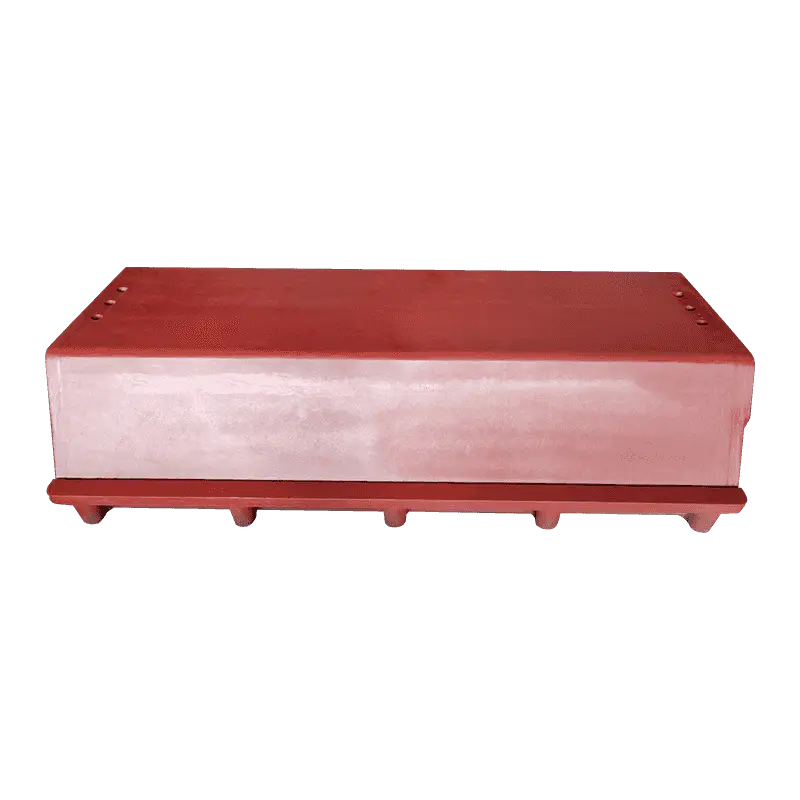
| 600-3 | 80-55-06 | 600 MPa | 370 MPa | 3% | Machine bases, columns, load brackets |
| 700-2 | 100-70-03 | 700 MPa | 420 MPa | 2% | Wear-critical inserts and guides |
Two consequences follow. If a heavy section calls for 600-3, expect a conversation about alloying or heat treatment, because the section itself works against the target. And elongation is the number buyers tend to skip; it is often the one that predicts how a casting behaves when a press fit or a thermal cycle pushes on it.
Coated Sand, Resin Sand, Green Sand: Match the Process to the Feature
The molding route sets achievable tolerance, surface finish, and tooling cost before the first pour. Choosing it late is expensive, because switching route usually means new patterns.
- Green sand: lowest pattern cost and good economics for medium and large parts in steady volume; thin walls and sharp internal cores need extra allowance.
- Resin-bonded sand (no-bake): a solid middle ground for medium batches, with better dimensional stability than green sand and flexible tooling.
- Coated sand (shell): the usual choice for thin-wall, high-repeatability parts such as compressor cylinders, where wall consistency matters more than pattern price.
- Heat treatment: not a molding process, but part of the same decision, since normalizing or stress relief changes both hardness and dimensional behavior after machining.
Tolerance claims need a class, not an adjective. A supplier who says "we hold one millimeter" is describing a single feature. Ask which tolerance grade applies to the specific feature your fixture locates on.
Where These Castings Sit Inside the Finished Machine
Parts are easiest to specify by the job they do, because that is how acceptance criteria get written in the first place.
Compressor castings
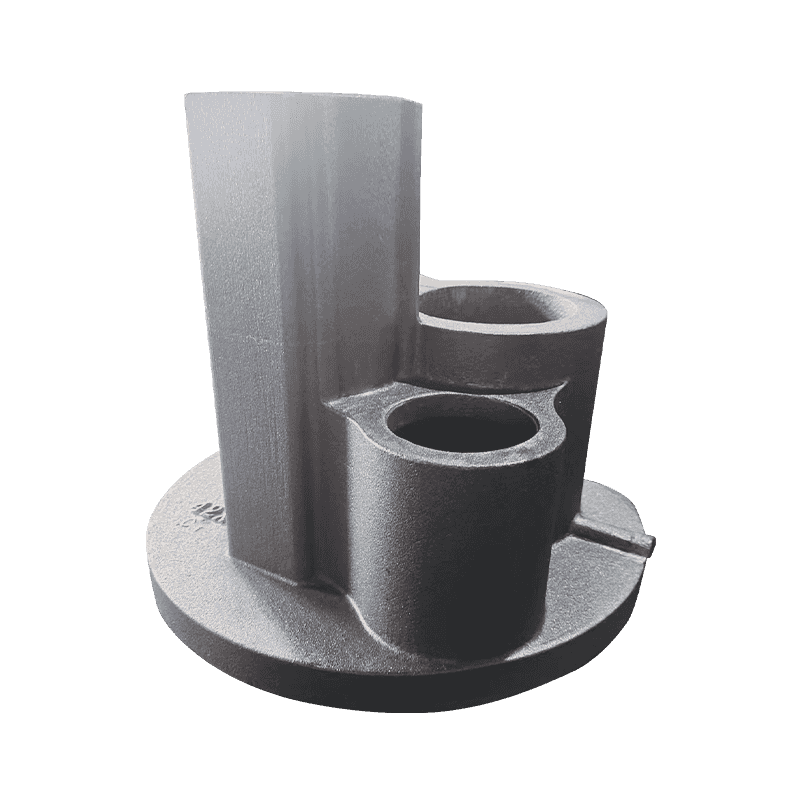
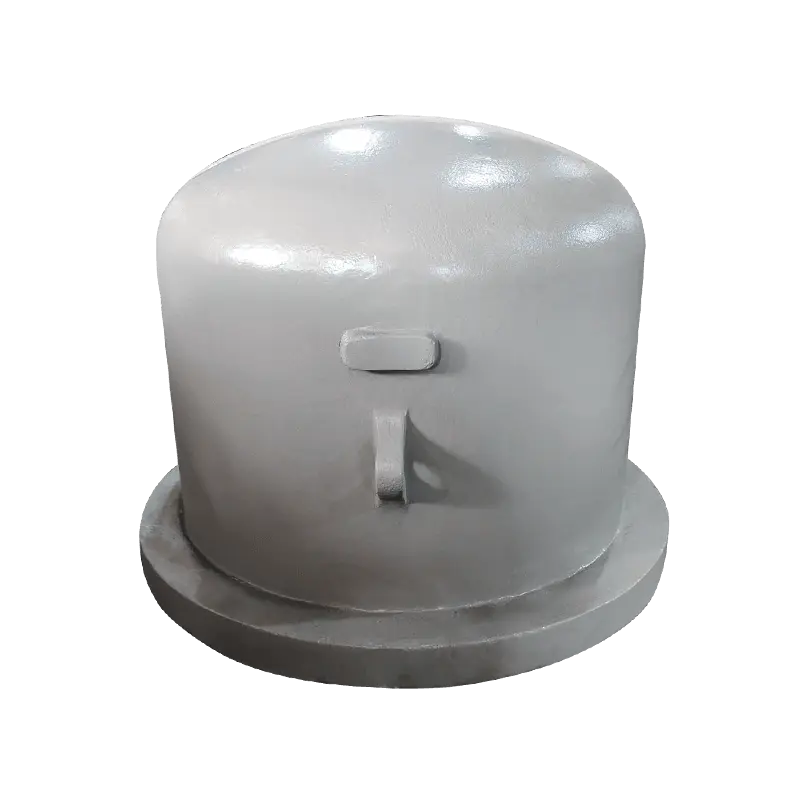
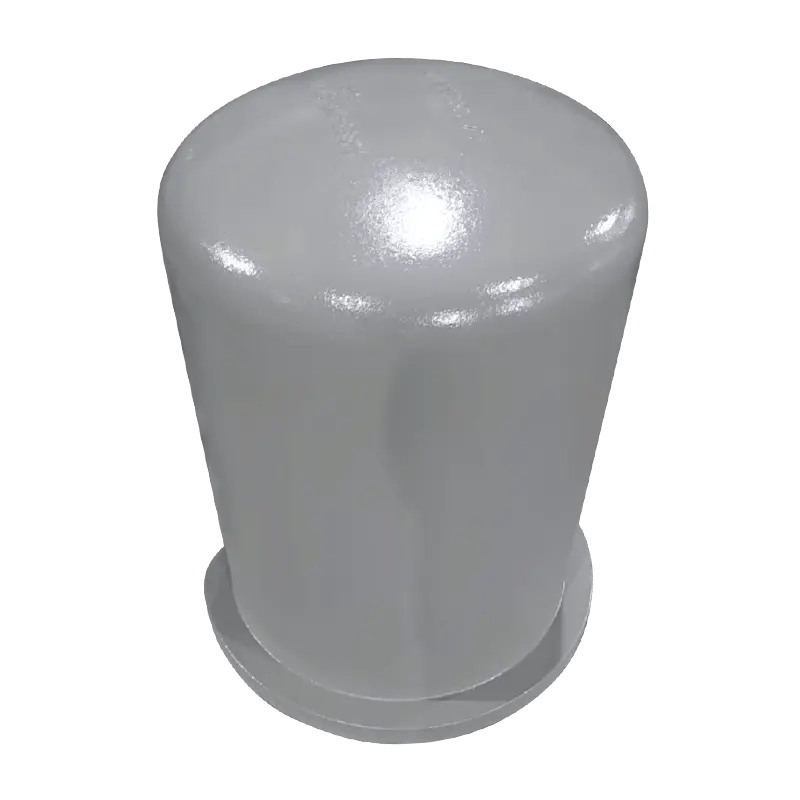
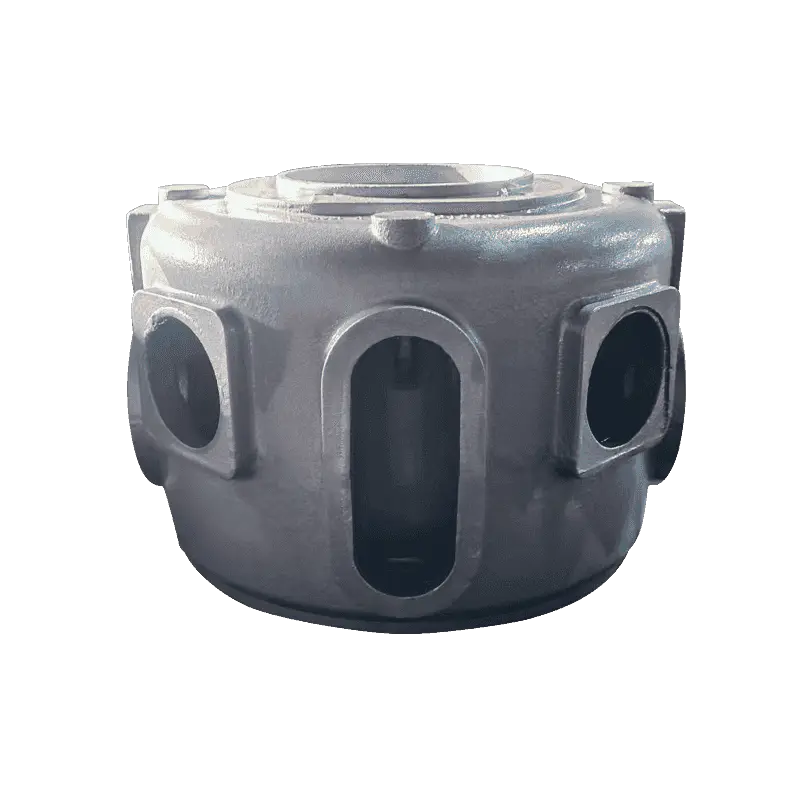
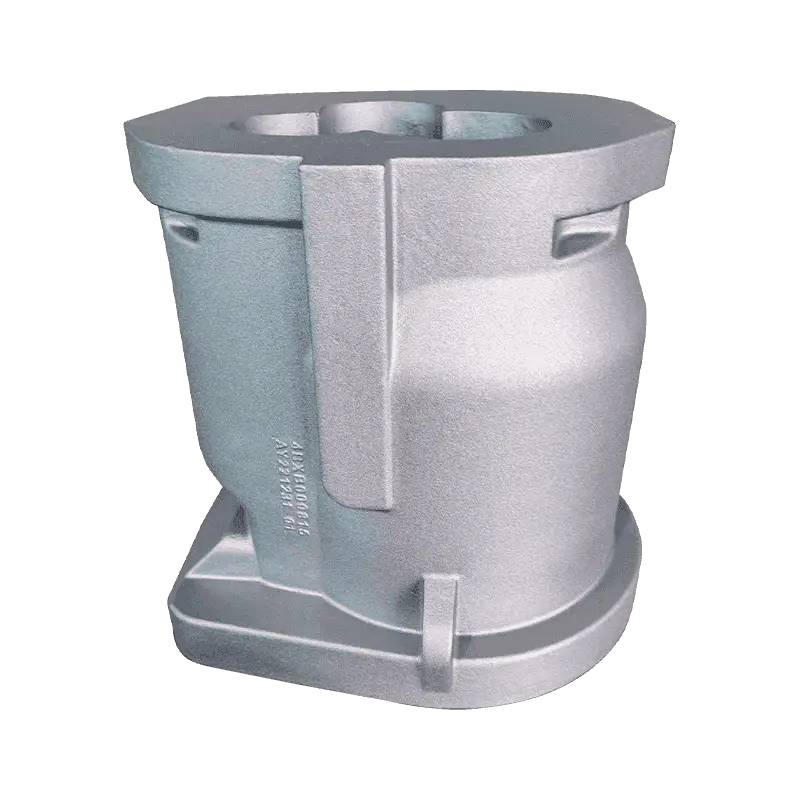
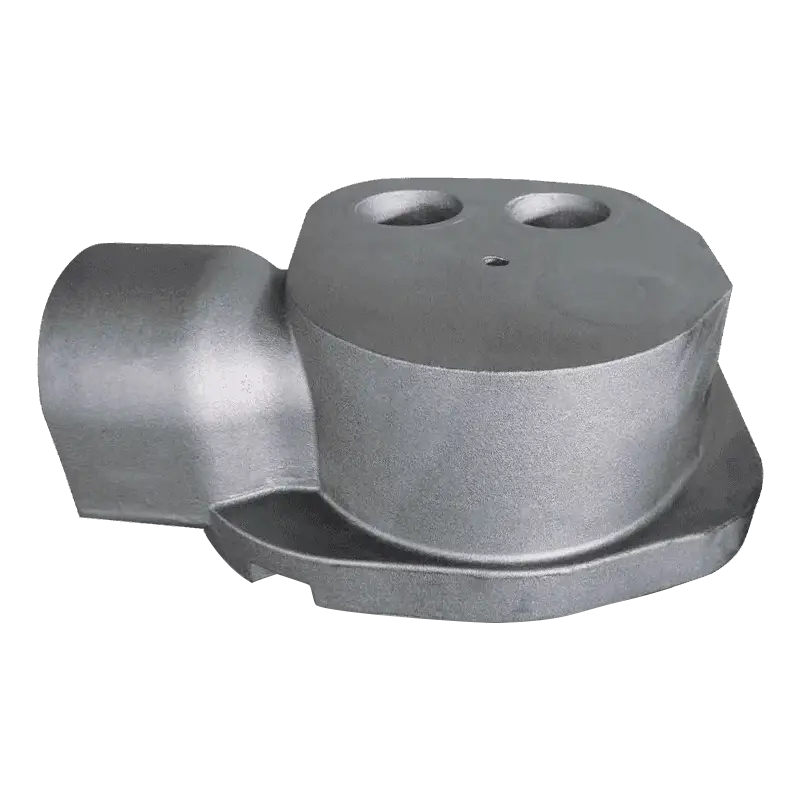
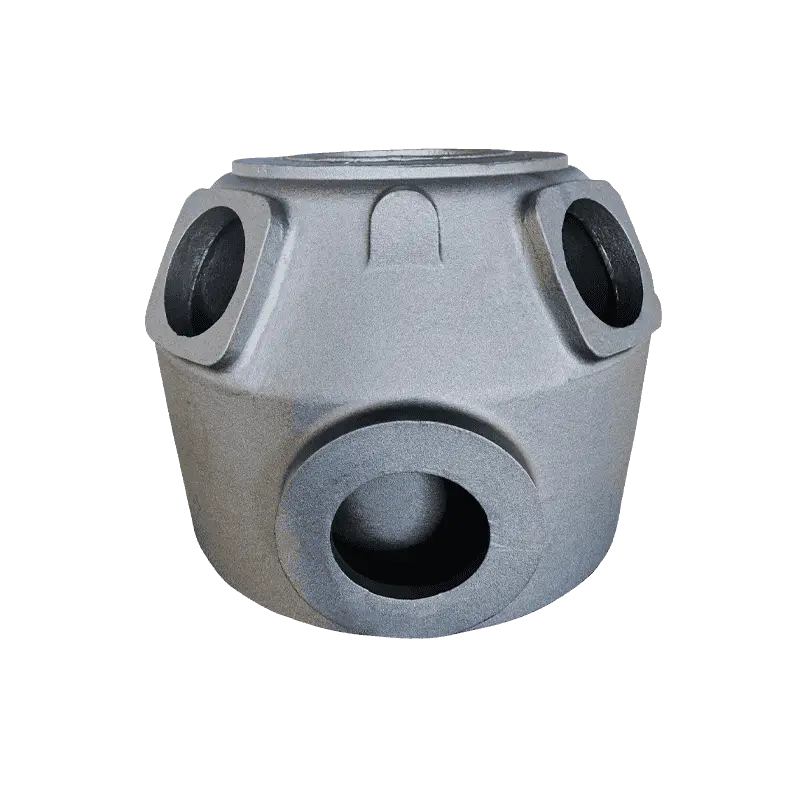
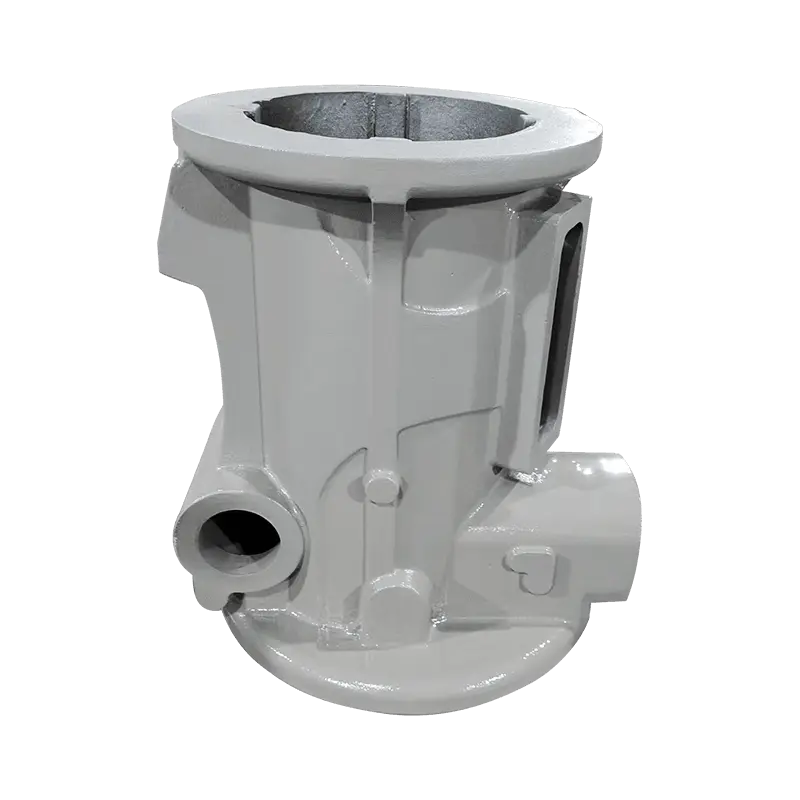
Compressor work comes down to sealing, alignment, and oil management. Bearing seats, rotor seats, crankcases, cylinders, exhaust seats and oil buckets each fail differently: a seat that is too soft wears oval, a cylinder wall that drifts loses compression, a crankcase that distorts will not hold a bearing preload. How you balance strength and wear resistance in a bearing seat is a typical example of a decision that has to be made at the casting stage, not after machining.
Pump and valve castings
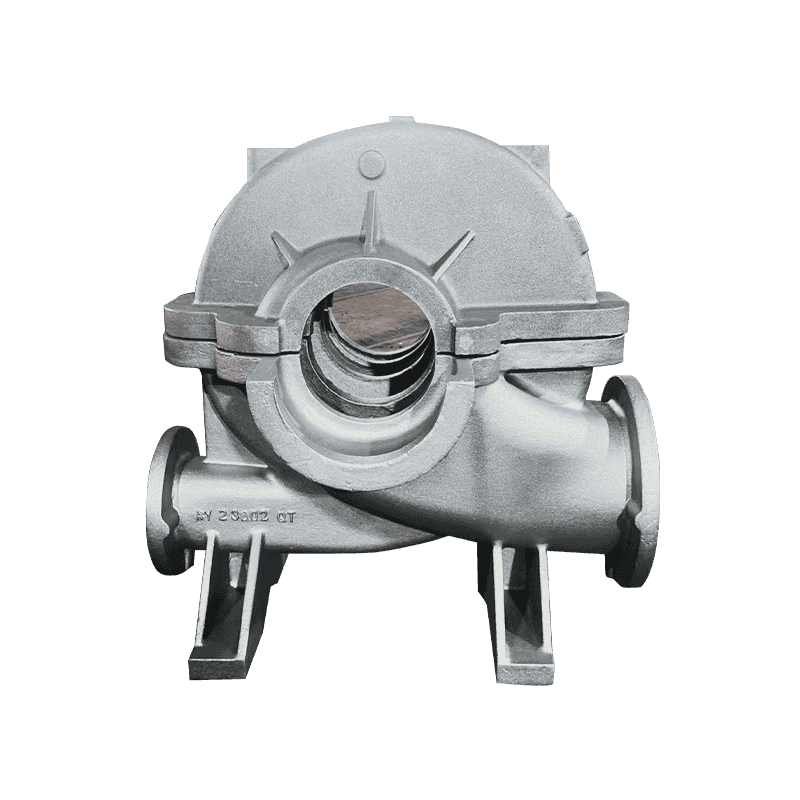
Axial flow pumps, pump bodies, double pump covers, piston pump valve bodies and pump discs are usually pressure-tight or flow-critical. Here the acceptance test is often a leak test plus a wall-thickness check, which means porosity control matters more than tensile strength.
Machine tool castings
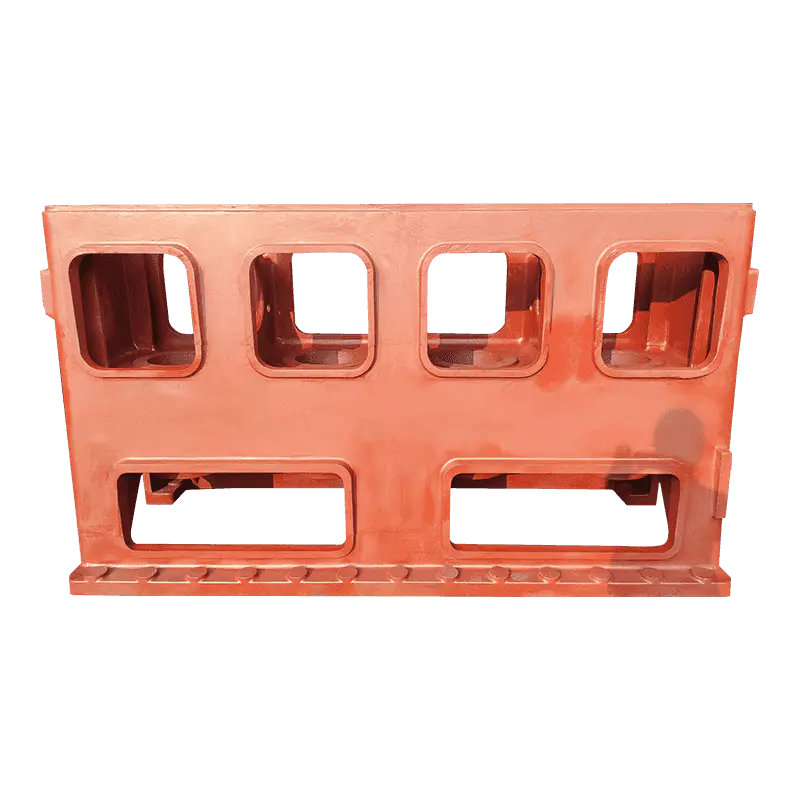
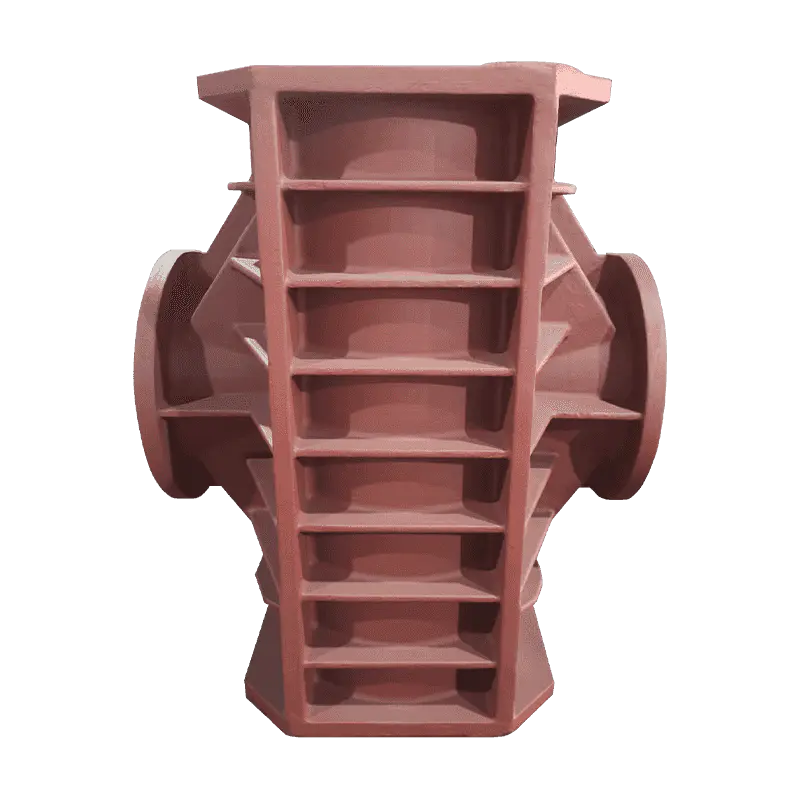
Bases and columns are the opposite case: heavy, quiet parts whose real value is stiffness and dimensional stability over years of service. Stress relief and section uniformity matter more than a tight linear tolerance.
What to Verify Before You Approve a Sample
A first-article sample proves what a foundry can do once. Approval should be about what it can do every time. Six items carry most of the weight:
- Nodularity measured on a section cut from the part itself, not only from a separately cast test bar.
- A dimensional report referenced to the same datums your fixture uses, with the tolerance class stated explicitly.
- Wall thickness at the thinnest section, measured on at least three parts from the same pour.
- Hardness range across the batch, since a spread wider than about 30 HB usually signals uneven cooling or heat treatment.
- A soundness check at load-bearing or pressure-tight sections, by ultrasonic testing or by sectioning a sacrificial part.
- Traceability from heat number to pour date to heat treatment batch, so a problem found later can be narrowed down quickly.
If those six items appear on a first-article report without being requested twice, you have most of what you need to place a repeat order with confidence.
Castings bought on price alone are the most expensive ones. A two percent lower unit price rarely survives one re-machining run, one air-freighted replacement batch, or one stalled assembly line.
What Actually Moves the Price
Unit price is the last number to look at, because it is assembled from six others.
- Pattern and core box amortization, spread across the batch size.
- Machining allowance: an extra 3 mm on a large face is real weight, real metal and real cutting time.
- Metallurgical route: alloying and heat treatment needed to reach a grade in a heavy section.
- Inspection scope: dimensional reports, ultrasonic testing and sectioned samples all add cost and all reduce risk.
- Scrap rate on thin-wall parts, where coated sand tends to earn its tooling cost back.
- Packing and export handling for parts with thin walls and finished machined faces.
A buyer who understands those six can negotiate with facts. A buyer who compares only the per-kilogram figure is negotiating with a number the foundry controls.
Precision ductile iron castings are a specification problem before they are a manufacturing problem. Decide which features your assembly cannot tolerate variation on, state the tolerance class and the measurement method in writing, and ask for the process route that supports them.
Then work in the right order: locate on the machining datum, work back to the casting, and let grade and molding process follow. That order rarely fails.