EN
EN  English
 Español
 русский
 Deutsch
Material Selection Guide for Industrial Buyers
Grey Ductile Iron Castings: Matching the Metal to the Machine
Not every cast iron part should be grey iron, and not every part should be ductile. Here is how experienced buyers separate the two before the pattern is cut.
A sourcing engineer evaluating grey ductile iron castings for a compressor line usually starts with a drawing and a material callout. The next question is whether that callout should be grey iron, ductile iron, or a combination of both across different parts. The short answer is that these two materials solve different problems: grey iron absorbs vibration and machines cleanly, while ductile iron absorbs shock and carries pressure.
The decision matters most at the specification stage. Once a casting is tooled and in production, changing the material grade means new patterns, new machining parameters, and new qualification tests. Resolving the grey-versus-ductile question before the first sample is poured saves far more money than any later correction.
Grey Iron and Ductile Iron Are Not Interchangeable
Both materials are iron–carbon–silicon alloys poured from the same type of furnace. The difference lies in the shape of the graphite in the final structure. In grey iron, carbon forms long, thin flakes. Those flakes give the material excellent vibration damping and make it a pleasure to machine, but they also act as internal stress raisers under tension, which limits elongation and impact strength.
In ductile iron, a small magnesium addition in the ladle causes carbon to solidify as tiny spheres, called nodules. Without sharp flake tips to concentrate stress, ductile iron reaches tensile strengths of 400 MPa and upward, with elongation from 2 to 18 percent depending on grade. The trade-off is somewhat lower damping and slightly more demanding machining compared with grey iron.
For procurement engineers, the practical translation is simple: grey iron keeps structures quiet and stable; ductile iron keeps structures intact under load.
| Property | Grey Iron | Ductile Iron |
|---|---|---|
| Graphite form | Flakes | Spheroids |
| Tensile strength | 150–350 MPa | 400–700+ MPa |
| Elongation at break | < 1% | 2–18% |
| Vibration damping | Excellent | Moderate |
| Machinability | Excellent | Good |
| Impact resistance | Low | High |
| Relative cost per part | Lower | Higher |
Grey iron absorbs vibration; ductile iron absorbs shock. Understanding that single difference resolves more casting disputes than any price negotiation.
Matching the Alloy to the Component
Compressor castings
Compressor bodies, crankcases, bearing seats, and rotor seats spend their service life under continuous vibration and cyclic mechanical stress. Grey iron is the classic choice for these structural parts because it keeps resonance low and reduces radiated noise. Cylinders, valve areas, and discharge chambers, on the other hand, often face higher internal pressure and repeated thermal loading; ductile iron gives the safety margin these working zones need.
A typical compressor product line therefore uses both metals. The frame and support castings, where rigidity and damping matter, are usually grey iron. The pressure-containing and fatigue-sensitive zones, such as cylinders and exhaust seats, are specified in ductile iron. This hybrid approach is standard practice among experienced compressor OEMs.
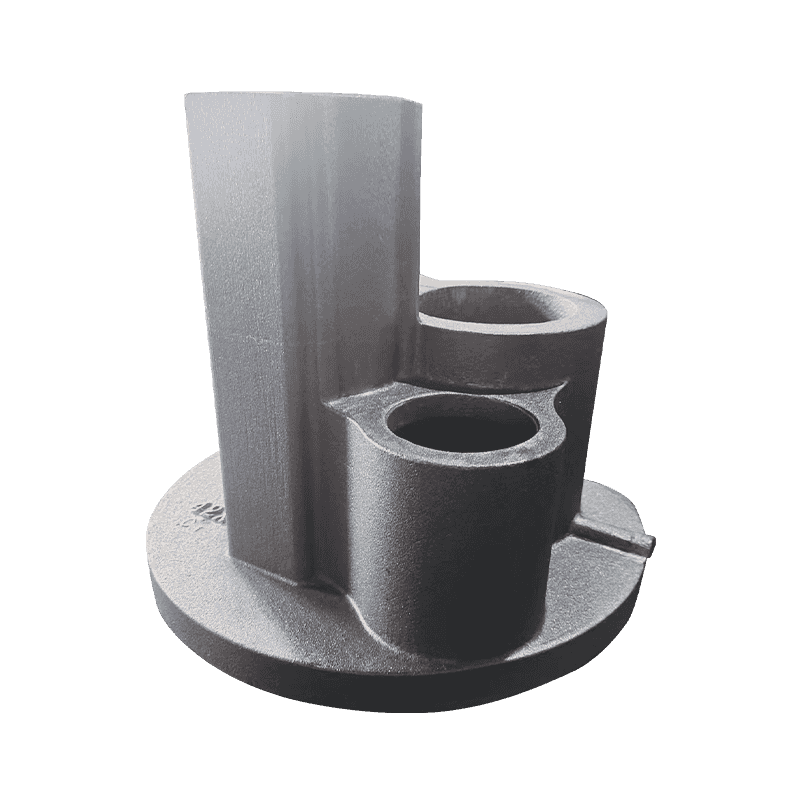
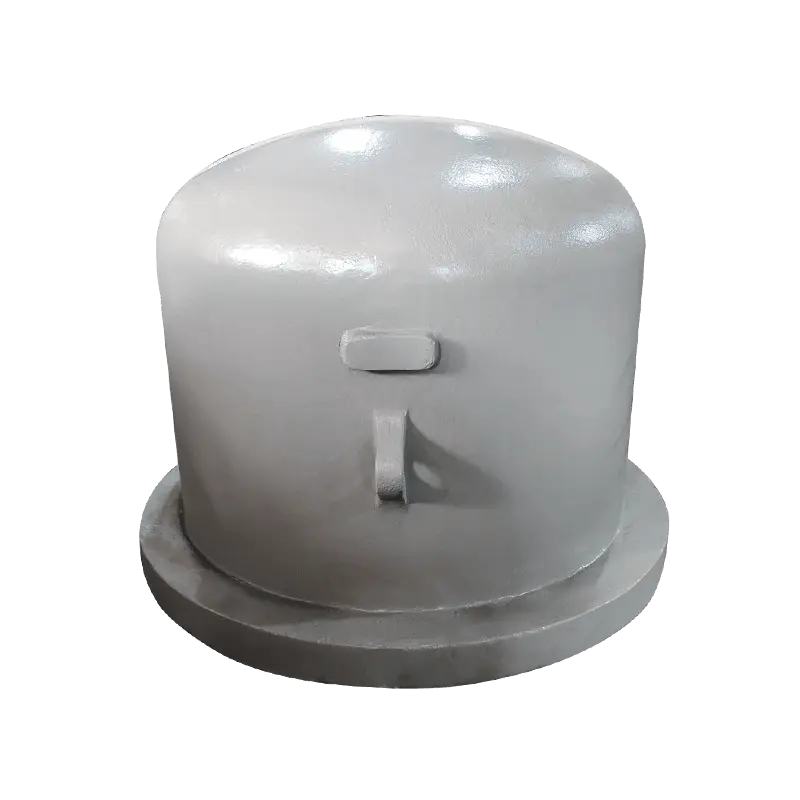
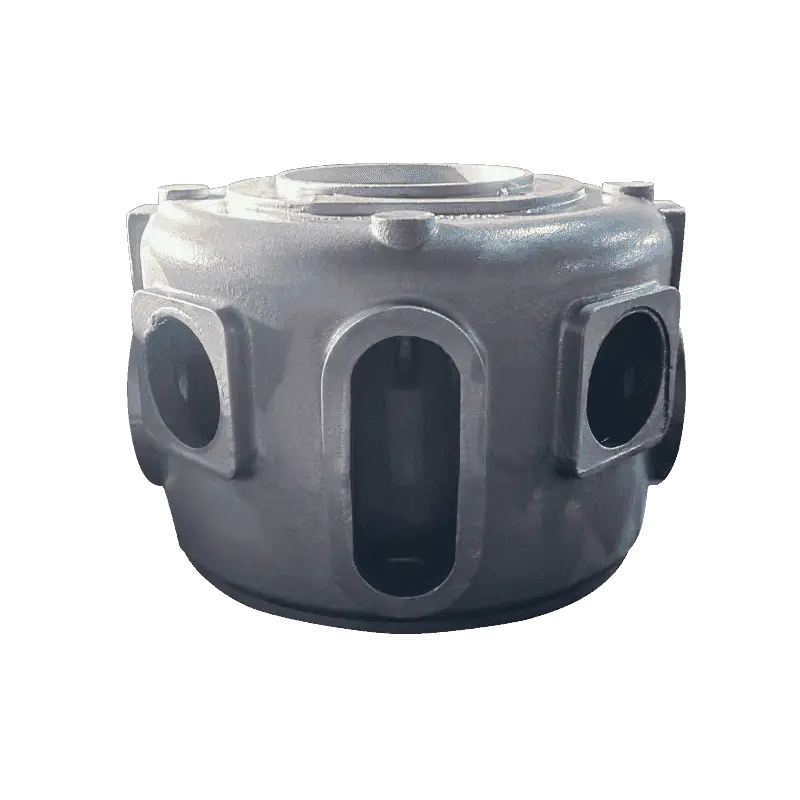
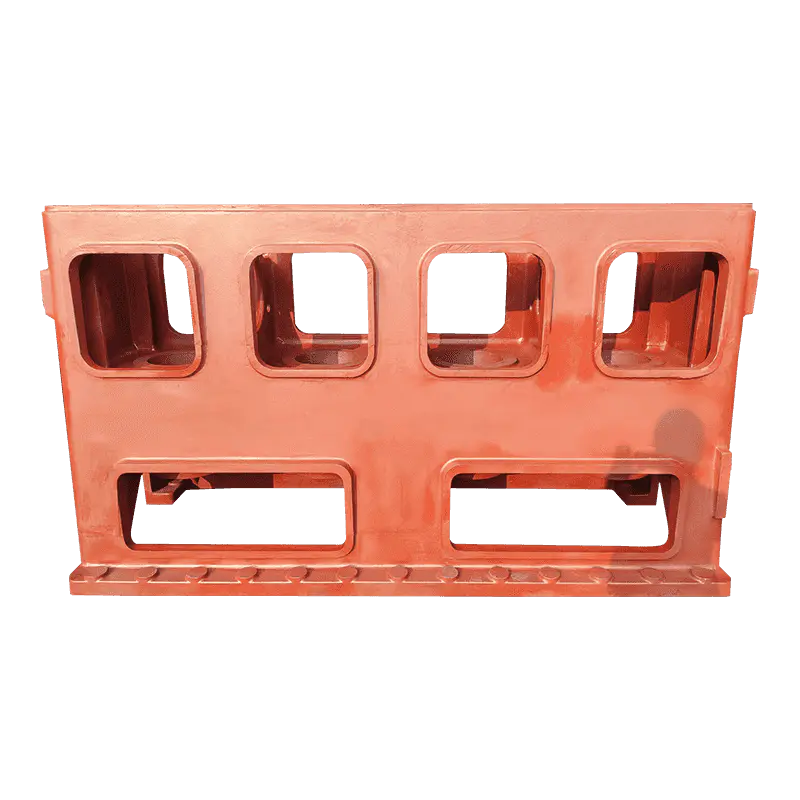 Compressor Body Casting in Ductile Iron for Pressure IntegrityThis casting is suited for compressor cylinders and other pressure-retaining zones where high density and resistance to fatigue, cracks, and deformation are required to pass hydrostatic tests.View Product →
Pump and valve castings
Pump bodies, pump covers, valve bodies, and impeller-related castings are judged by a different standard: pressure integrity. These parts must pass hydrostatic tests, resist erosion, and maintain dimensional stability in contact with process fluids. Ductile iron dominates this category because wall sections can be thinner and service pressure higher without the brittle failure risk of flake graphite.
Grey iron still appears in pump components where pressure is low and machining economy matters, such as bearing housings, covers, and auxiliary flanges. The selection logic should follow the pressure envelope, not tradition.
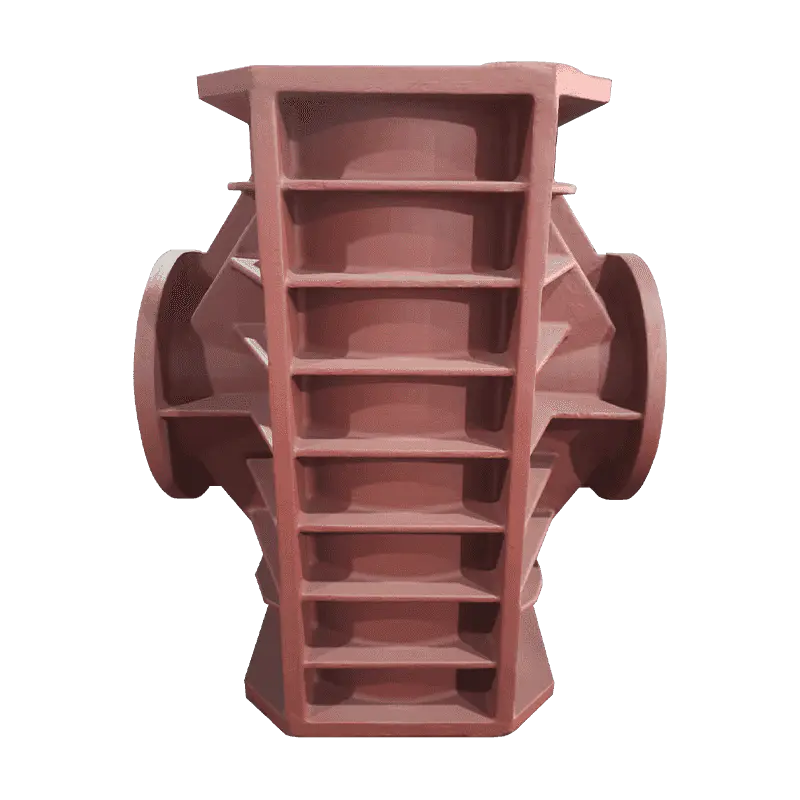
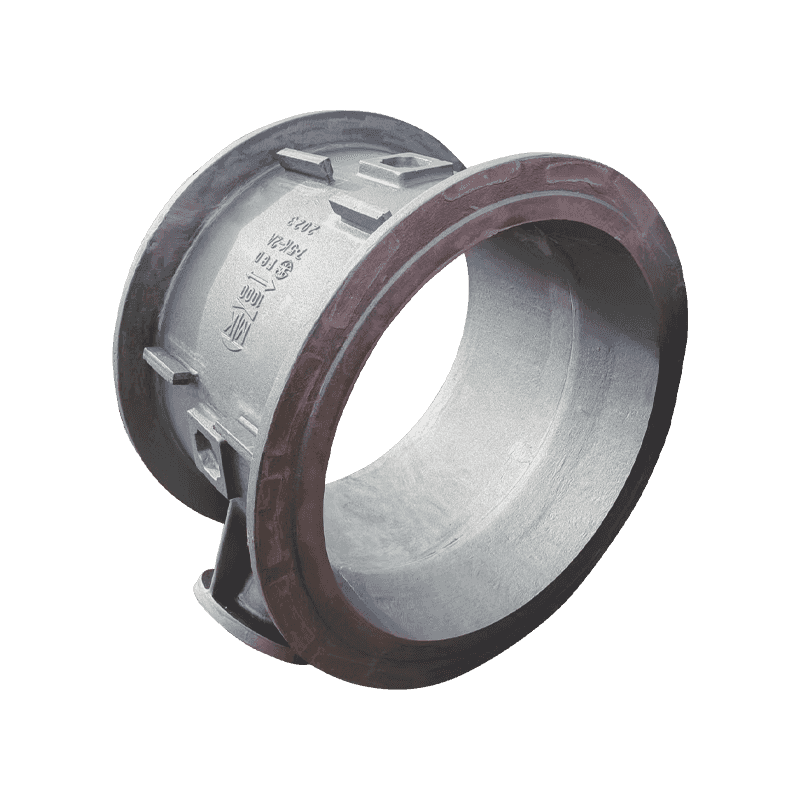 Pump Valve Body Casting for Flow Control and SupportThis pump valve body provides stable support and correct fluid routing through its integrated flow channels, a low-pressure component where grey iron machining economy makes sense.View Product →
Machine tool structures
Machine tool bases and columns carry a different requirement: long-term dimensional stability. A precision machining operation cannot hold tight tolerances if the structure behind it resonates or creeps under load. Grey iron is the time-tested material because its flake graphite structure damps vibration far better than steel or ductile iron, and it accepts the scraping and fine finishing that guideways demand.
Ductile iron enters machine tool construction in specific load-bearing zones, such as spindle brackets and heavily loaded joints, where tensile strength matters more than damping. Thermal treatment also shapes long-term accuracy: the heat treatment of machine tool castings can improve wear resistance while relieving residual stress.
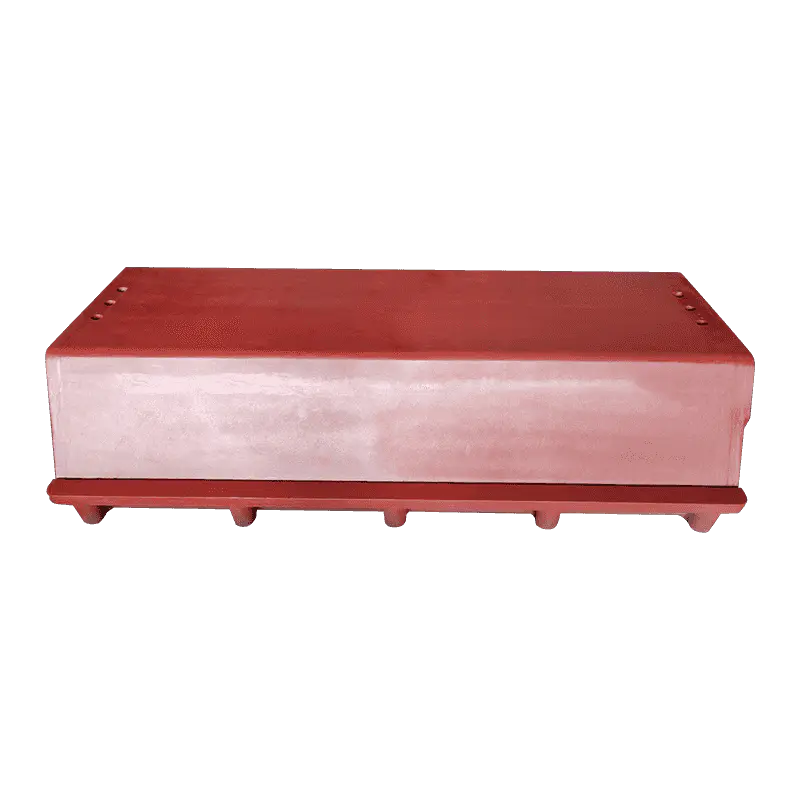
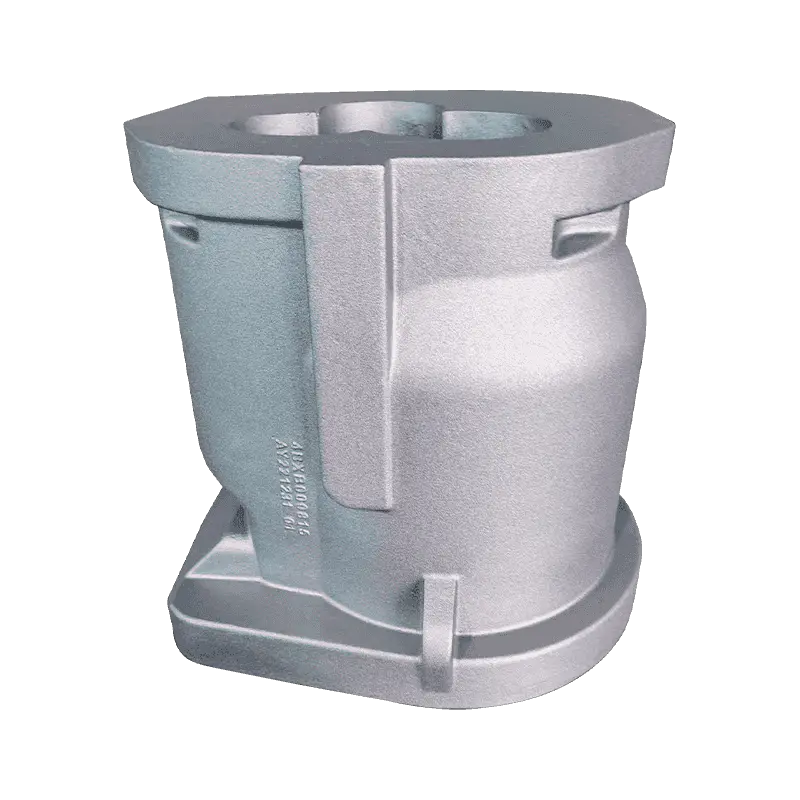
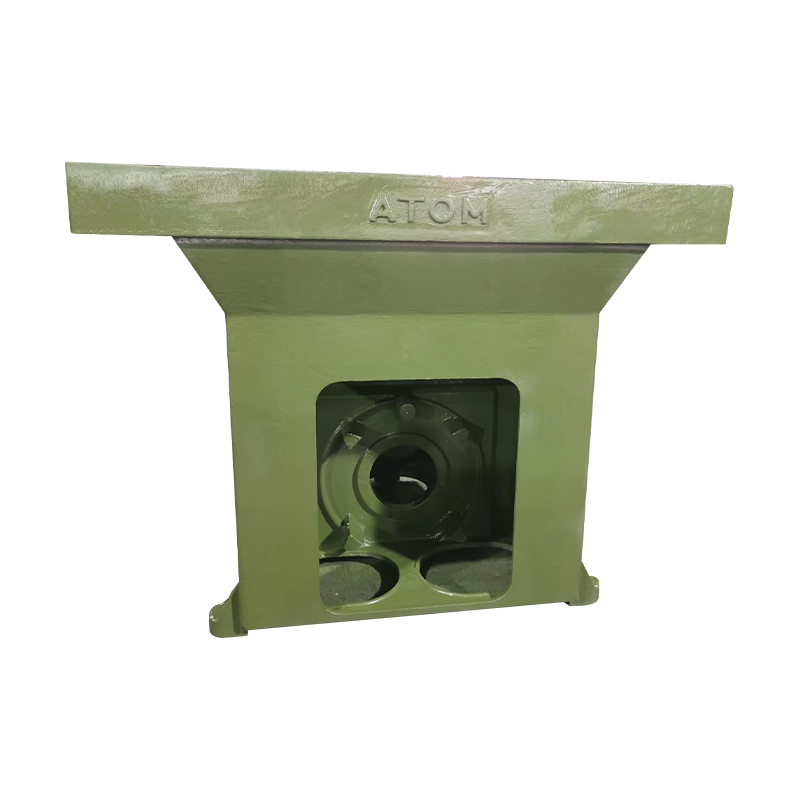 Machine Tool Base Casting for Stability and Vibration DampingThis base supports machine tool components and maintains working accuracy by resisting deformation and absorbing vibration, a specific choice when grey iron damping outweighs tensile strength.View Product →
Four Quality Factors to Verify Before Approving a Supplier
The phrase "grey ductile iron castings" sounds broad enough to cover any foundry, but the difference between a casting that lasts and one that leaks, cracks, or distorts is process discipline. Before committing to a supplier, buyers should verify four areas.
- Metallurgical control. Carbon equivalent, silicon content, and inoculation practice determine graphite form and chill. A foundry that records every melt and can share spectrochemical analyses is a foundry that can hold a grade across production runs.
- Section sensitivity. A casting with both thin and thick sections is difficult to pour because cooling rates differ. Grey iron that chills hard in thin sections becomes difficult to machine; ductile iron that loses nodularity in heavy sections becomes weak. The supplier should explain how both conditions are controlled.
- Dimensional tolerance and machining allowance. Casting tolerance classes and agreed machining allowances define how much material your machining center must remove. Disputes often start from inconsistent allowances, not from wrong nominal dimensions.
- Inspection and testing. Confirm whether the foundry performs tensile, hardness, pressure, ultrasonic, or magnetic particle testing. A test certificate is only meaningful if it corresponds to the same batch as your castings.
Working with a Foundry That Treats Both Families as Core Business
Haian Aoyu Machinery Manufacturing Co., Ltd. produces grey iron and ductile iron castings as its core activity, not as an occasional side line. The company operates a 20,000-ton annual capacity foundry in Nantong, Jiangsu, with 30,000 square meters of buildings, and exports to the United States, Germany, Italy, Denmark, Switzerland, Belgium, Spain, and Japan.
For equipment manufacturers, the practical benefit is that both iron families can be planned under one supply chain. Compressor castings such as bodies, frames, cylinders, crankcases, and oil buckets; pump and valve castings such as pump bodies, covers, and valve bodies; and machine tool castings such as bases and columns can be consolidated under a single quality system and a single communication channel.
A foundry that casts both families daily is also faster at turning a drawing into process parameters. When one part is grey iron and another is ductile iron, the supplier can flag potential casting issues before tooling is cut, rather than after the first batch fails inspection.
The Bottom Line
"Grey ductile iron castings" is not a single material decision; it is a portfolio decision. Grey iron contributes vibration control, machinability, and lower cost. Ductile iron contributes strength, toughness, and pressure integrity. The best procurement strategy is to define every casting by its mechanical job, then let the foundry propose the appropriate grade and verify the metallurgy, dimensions, and inspection records before production begins.