EN
EN  English
 Español
 русский
 Deutsch
A ductile iron rotor hub for a modern wind turbine can weigh more than ten tonnes. It is cast, machined, and then bolted to a tower that may rise three hundred metres above the ground. Once installed, it will be loaded and unloaded millions of times, at temperatures as low as minus forty degrees Celsius, and expected to remain structurally sound for twenty years or more.
That combination of heavy sections, harsh climate, and fatigue-dominated service is why wind turbine castings are specified almost as often in EN-GJS-400-18U-LT ferritic ductile iron as steel is specified for the main shaft. Ductile iron gives the designer the strength and toughness to form large structural shapes, and it does so at a casting and machining cost that forged or fabricated steel alternatives cannot match.
Why ductile iron castings dominate wind turbine hardware
In ductile iron, the graphite inside the microstructure is spherical rather than flake-like. Those nodules interrupt the ductile metal matrix far less than the sharp graphite flakes of gray iron, which is why ductile iron delivers measurable elongation and impact strength across a wide range of temperatures. For wind turbine components, the practical result is a material that can carry heavy loads, survive cold climates, and be cast into large near-net-shape structures such as hubs, frames, and housings.
The principal wind turbine castings made in ductile iron include:
- Rotor hubs
- Main bearing housings
- Bed frames and main frames
- Gearbox housings
- Torque arms
- Yaw and pitch drive housings
- Brake calipers and mounting brackets
Gray iron is cheaper and easier to cast, but its flake graphite makes it brittle; it is limited to lightly loaded parts such as counterweights, covers, and cable trays. Cast steel offers higher strength values on paper, but its higher melting temperature, more expensive moulding, longer machining times, and greater tendency to shrinkage defects make it the exception rather than the rule for these large-section components. That is why ductile iron, the material family we hope to make more transparent in What Is Ductile Iron, occupies the centre of every wind turbine casting discussion.
EN-GJS-400-18U-LT: The grade that defines the category
Most European wind turbine specifications reference the standard EN 1563 and call out EN-GJS-400-18U-LT, the low-temperature ferritic ductile iron previously known as GGG 40.3. The grade code explains the material: 400 MPa minimum tensile strength, 18 percent minimum elongation, U for a mandatory notched impact test, and LT for low-temperature toughness.
Typical minimum requirements for this grade in wind turbine applications are summarised below.
| Property | Minimum requirement | Test condition |
|---|---|---|
| Tensile strength Rm | 400 MPa | Separately cast test sample |
| 0.2% proof strength Rp0.2 | 240 MPa | Separately cast test sample |
| Elongation A | 18% | Separately cast test sample |
| Impact strength KV | 12 J average, 9 J single | At -20 °C, V-notch |
| Low-temperature option | 10 J average | At -40 °C, added by many OEMs |
The critical requirement is the ferritic matrix. Ferrite is the soft, ductile phase of cast iron; when it surrounds the graphite nodules, a developing crack must continually reinitiate its path instead of running through hard pearlite. The U in the designation means the impact value has to be demonstrated, not assumed, so a foundry must control the as-cast or annealed microstructure with care. For northern installation sites, turbine OEMs commonly add a -40 °C impact test, a higher nodularity minimum, or both. If a foundry cannot guarantee those values in a two-tonne hub section, the casting has already failed the specification before it leaves the shop.
Fatigue life governs the design
Wind turbine castings are designed around fatigue rather than static strength. The stress range in a hub or bed frame can cycle ten million times or more, so any volumetric defect has the potential to become a crack nucleus. EN-GJS-400-18U-LT, with its ferritic matrix, offers the crack tolerance to handle that duty. But the grade alone is not enough. Section sensitivity is the hidden risk: a wall in a hub that is 100 mm thick cools at a completely different rate than a thin rib beside it. Coarser graphite, lower nodule counts, and residual carbides can appear locally, and with them lower toughness and fatigue resistance.
Good design helps. Keep section thickness as uniform as possible, blend heavy sections into ribs with gradual transitions, and round every re-entrant corner, because stress concentrations are where fatigue cracks begin.
Process control in the foundry
Large ductile iron wind turbine castings are not produced by luck. Every step of the foundry process must be disciplined:
- Nodularisation. Magnesium is added to the melt to transform graphite into nodules; consistency of this treatment decides whether the part reaches 90 percent nodularity or less.
- Inoculation. Repeated inoculation with ferrosilicon-based inoculants increases the nodule count and suppresses free carbides in thin edges.
- Pouring. Filters and controlled pouring speed prevent dross and reoxidation products from ending up in critical load paths.
- Feeding. Riser design must be validated against solidification simulation so that isolated hot spots do not shrink during cooling.
- Heat treatment. A ferritising anneal dissolves carbides and homogenises the matrix, restoring the elongation and impact values required by the specification.
Foundries with documented heat-treatment routines and the ability to simulate filling and solidification have a decisive advantage in this product class.
A large ductile iron casting is graded at the moment it solidifies. No amount of machining will correct a microstructure that failed to develop properly.
What a responsible buyer specifies
For buyers, the discussion about ductile iron wind turbine castings is therefore a discussion about requirements. A serious technical specification should cover at least:
- Material grade and standard: EN-GJS-400-18U-LT to EN 1563 in Europe, or ASTM A536 Grade 65-45-12 with an agreed low-temperature impact clause for North American projects.
- Microstructure acceptance: minimum nodularity, graphite size range, and maximum pearlite content in the matrix.
- Test sample position and frequency: separately cast versus cast-on samples, and how many Charpy tests are required per melt.
- Non-destructive testing: ultrasonic testing level, acceptance limits, and magnetic particle inspection of machined critical surfaces.
- Repair policy: which minor defects may be repaired, by which procedure, and how repaired areas are re-inspected.
- Documentation: EN 10204 3.1 material certificate, heat-treatment charts, and NDT reports.
Foundry capability determines casting integrity
The step from small ductile iron castings to wind turbine scale is not linear. Heavy sections demand experience in gating, feeding, inoculation, heat treatment, crane handling, and non-destructive testing that only operators of large-section castings accumulate. A turbine OEM or tier-one supplier is therefore evaluating not just chemistry but the foundry's full production floor.
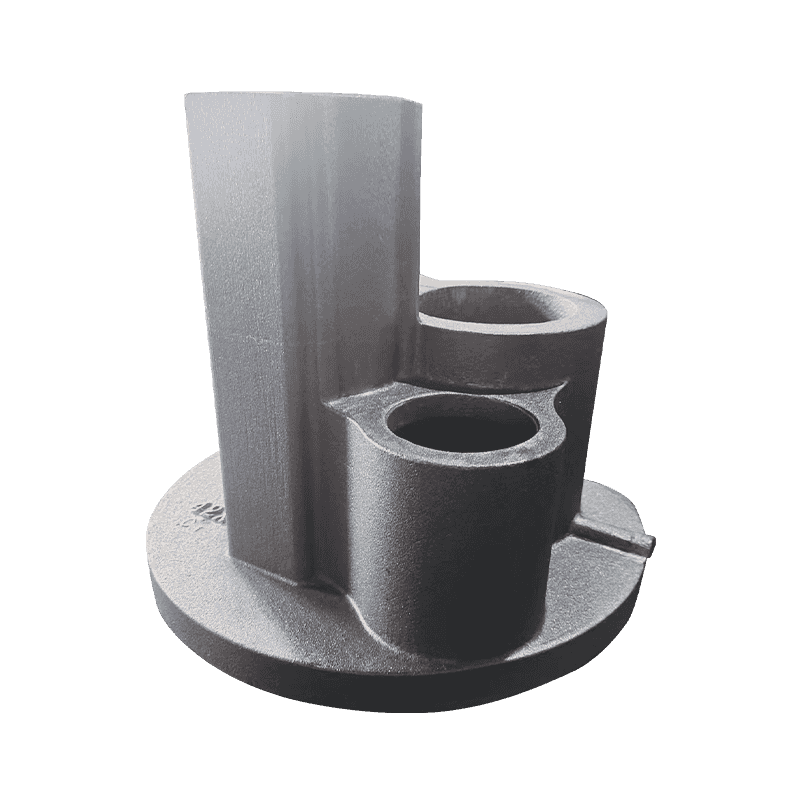
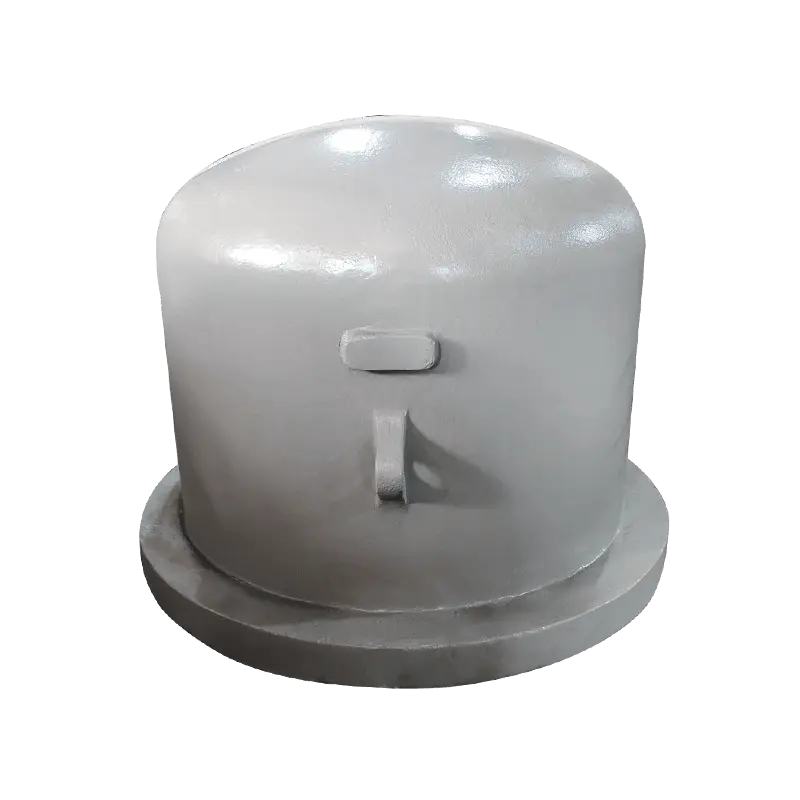
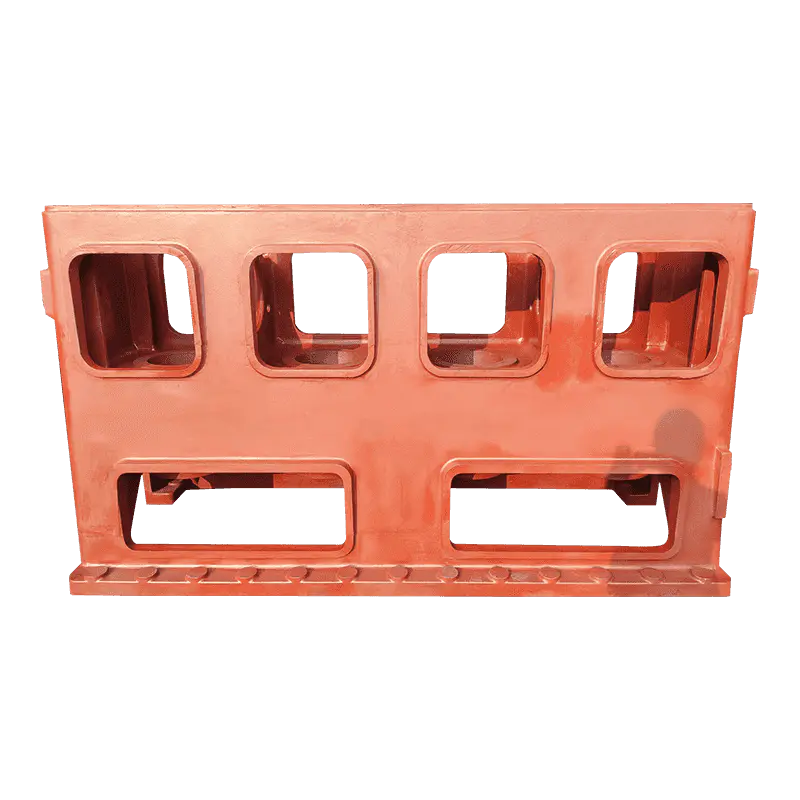
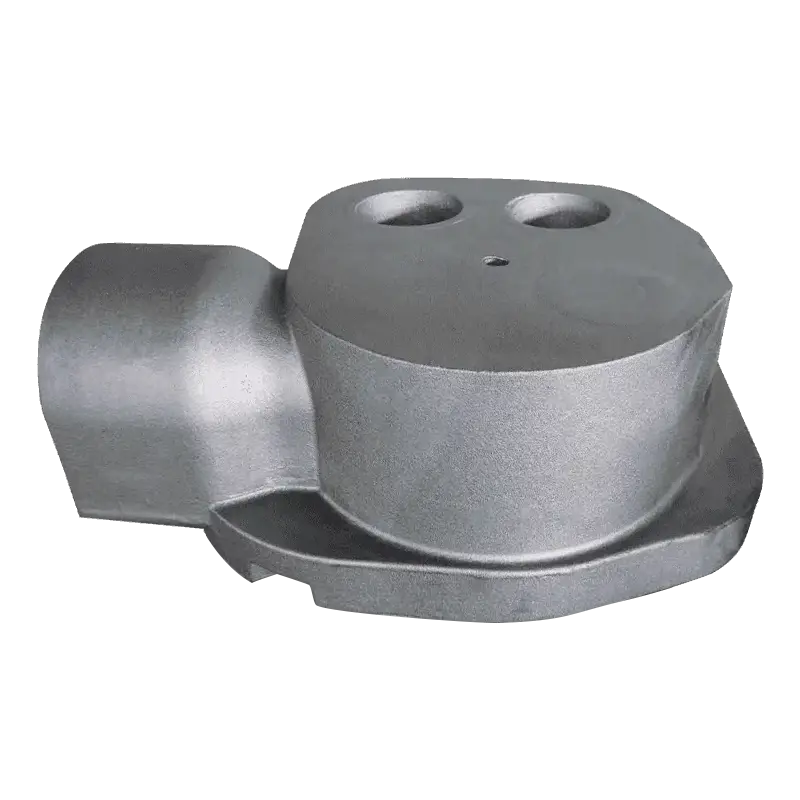
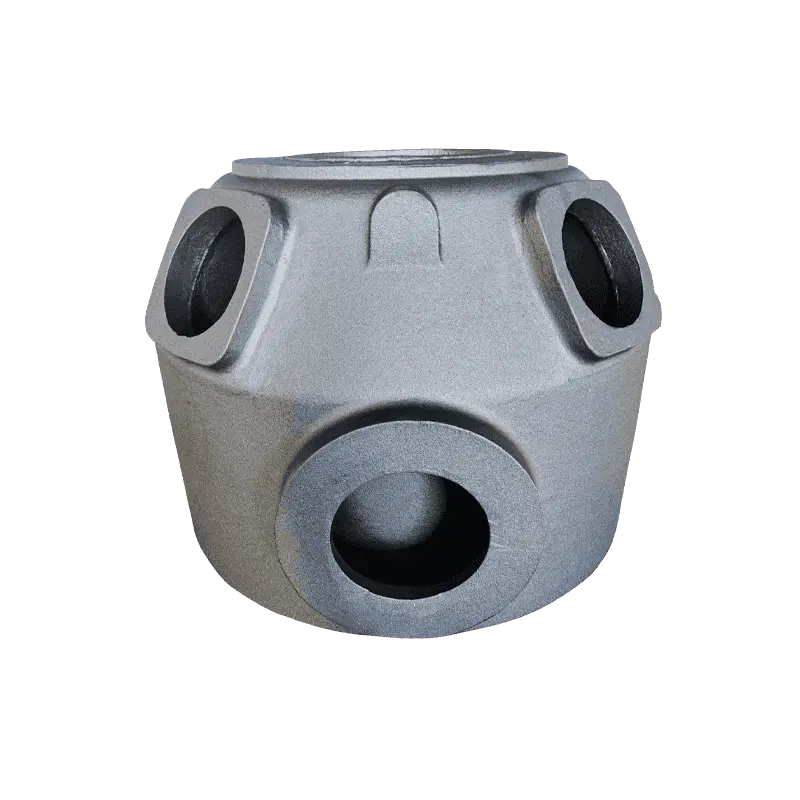
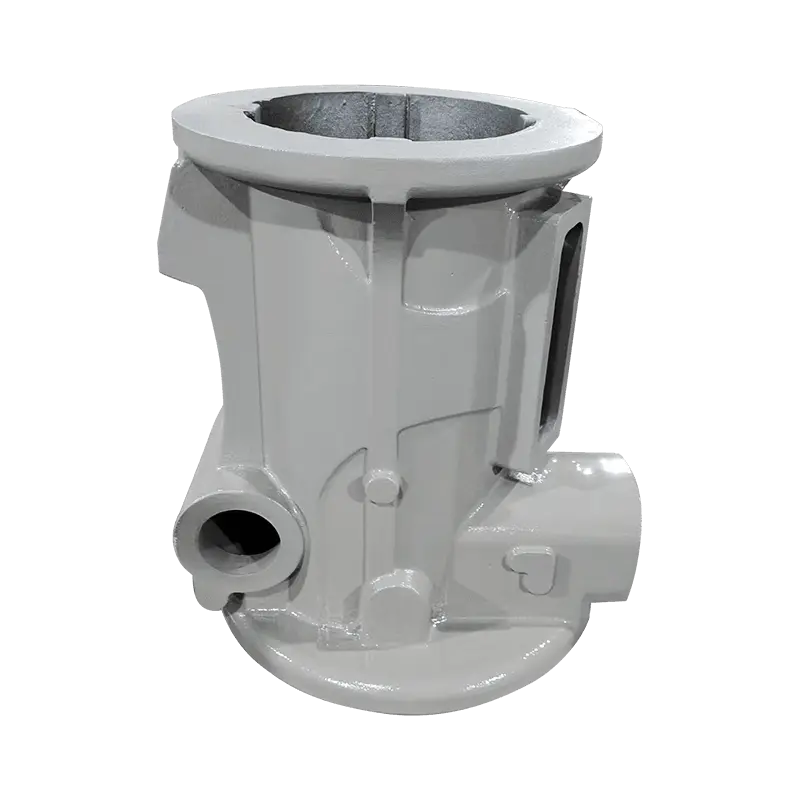
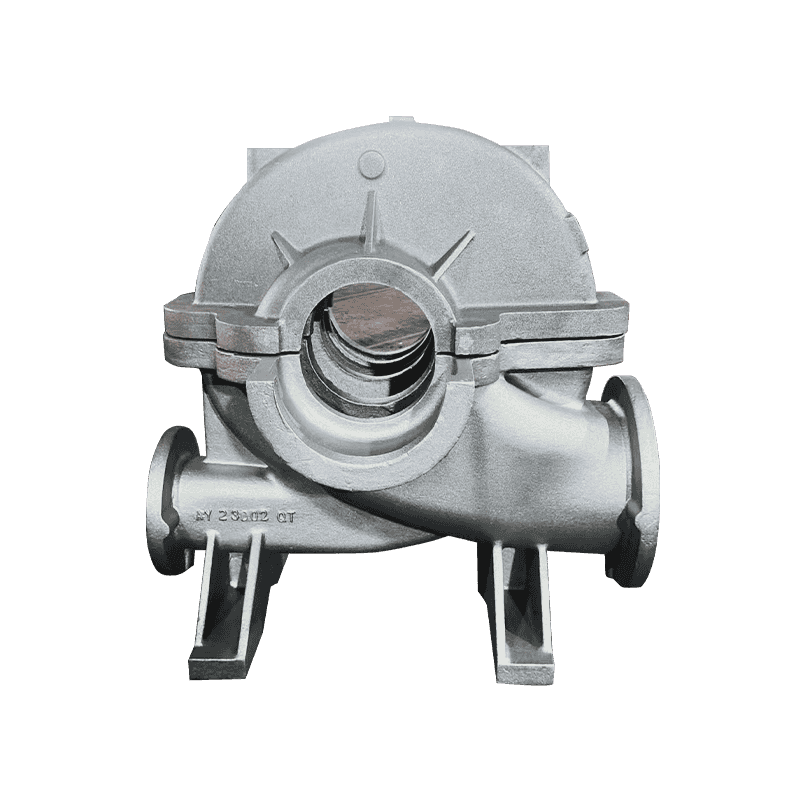
Haian Aoyu Machinery Manufacturing, a Chinese ductile and gray iron foundry with 20,000 tonnes of annual casting capacity, a 30,000 square-metre workshop, and export deliveries to Denmark, Germany, Italy, Spain, and the United States, is a practical example. Its day-to-day production covers heavy structural castings, pressure-containing bodies, and complex core assemblies, all sharing the same metallurgical and dimensional discipline required by wind turbine components.
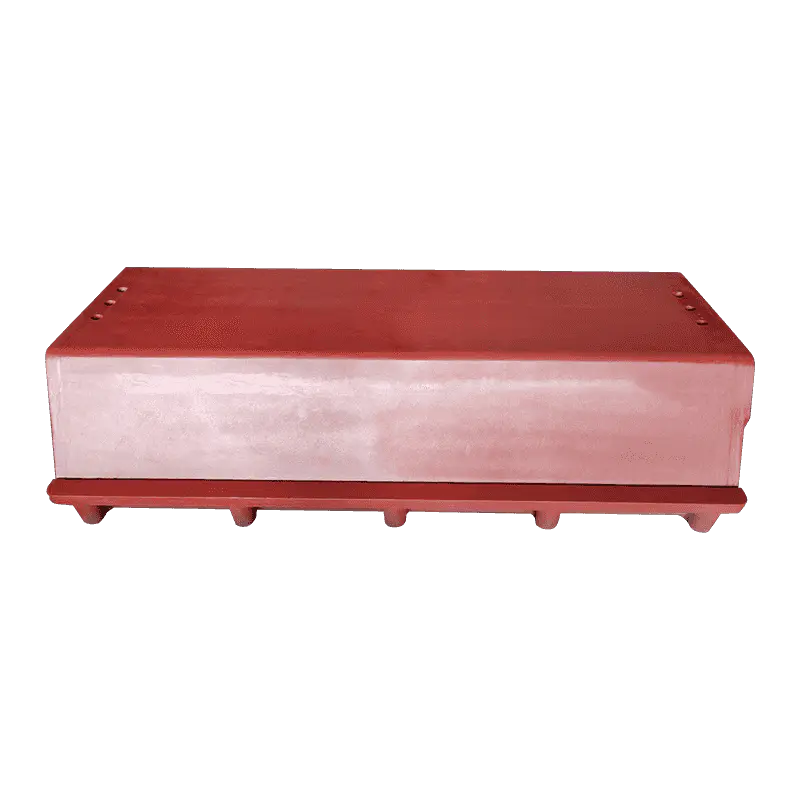
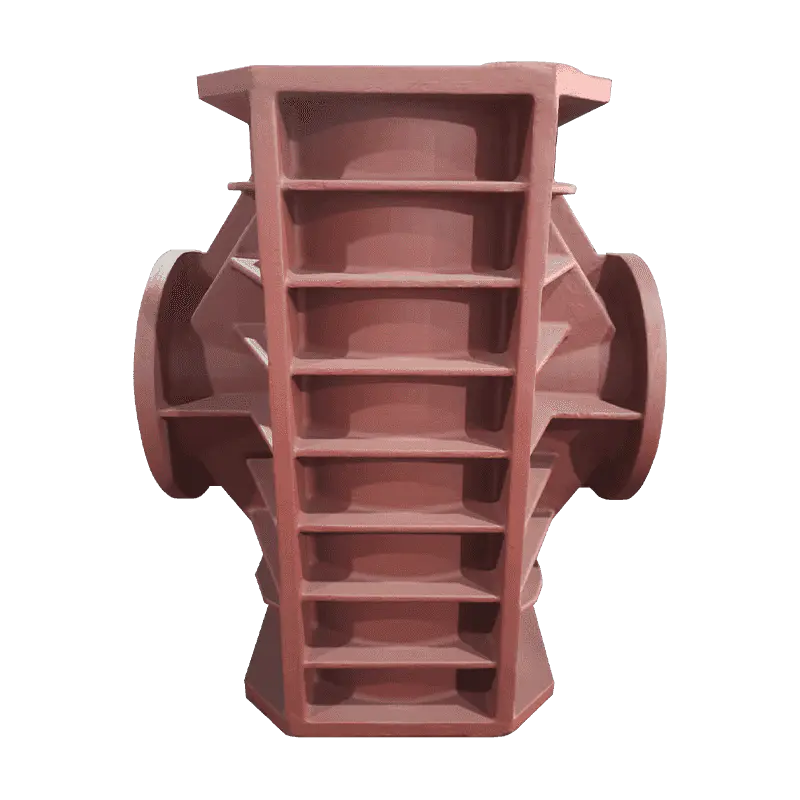
Machine bases and columns are large, rigid structures whose controlled nodularity and freedom from porosity are decisive, exactly as in a turbine bed frame.
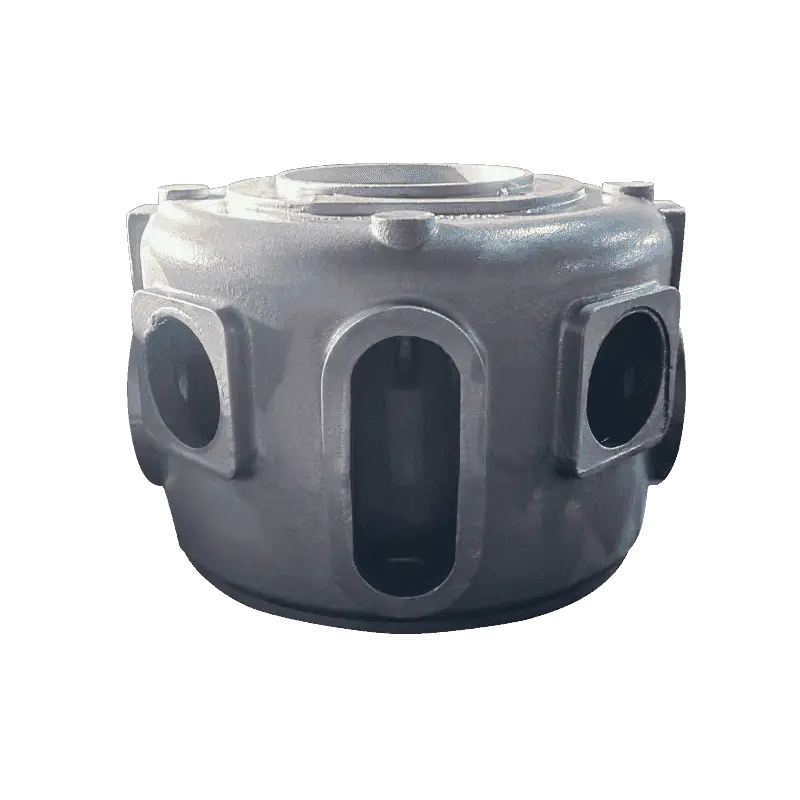
Pump bodies and valve bodies must hold internal pressure for decades, which forces the same dense microstructure that a gearbox casing demands.
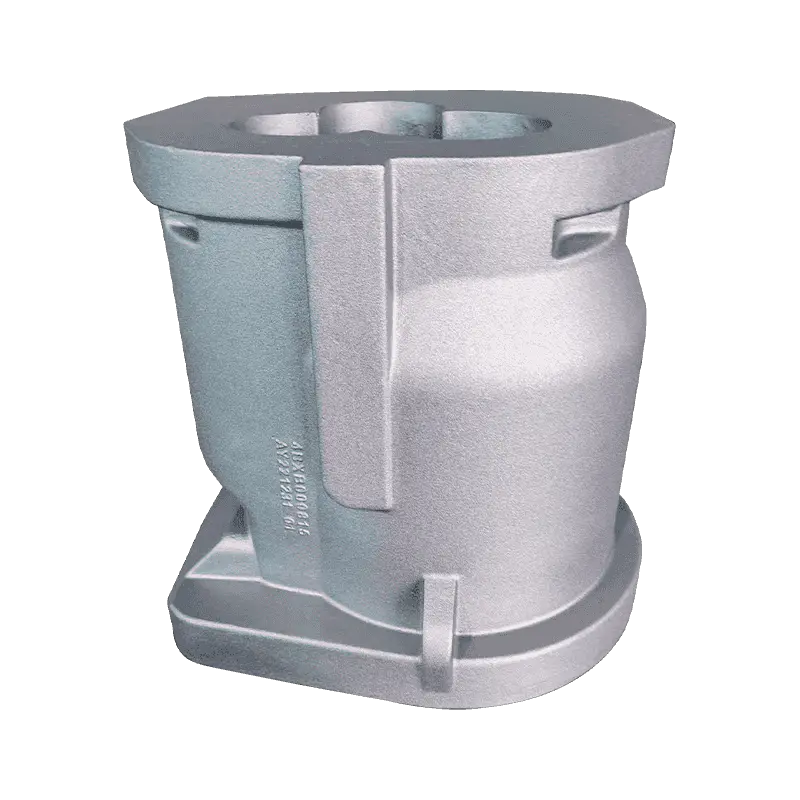
Compressor bodies and cylinders are complex core assemblies where repeated dimensional and metallurgical accuracy is essential, the same discipline a wind turbine hub requires.
To summarise, ductile iron castings for wind turbines are not exotic materials. They are the proven engineering backbone of modern turbines. What separates a reliable supplier is whether the foundry truly controls the microstructure in heavy sections, proves it with low-temperature impact testing, and communicates honestly about NDT results. Specify the grade. Fix the test temperature. Audit the process. The casting will quietly carry the rotor through twenty years of winter storms.