EN
EN  English
 Español
 русский
 Deutsch
The compressor manufacturer recently asked us to review a cylinder casting that kept cracking at the discharge valve seat after roughly 8,000 operating hours. The part was produced in conventional ductile iron, and the failure mode combined impact fatigue with sliding wear. That is exactly the situation where austempered ductile iron castings deserve a close look before anyone redraws the component in steel.
Austempered ductile iron, commonly called ADI, is ductile iron that has been heat treated to roughly double its strength while retaining the shape freedom of a cast part. In many components currently made from forged or fabricated steel, ADI delivers comparable mechanical properties at a lower part cost and a lighter weight. This article explains what ADI is, how the austempering process works, what properties you can specify, and where you should think twice.
What Is Austempered Ductile Iron?
ADI starts as ductile iron, also known as nodular iron or spheroidal graphite iron. The graphite in its structure forms small spheres rather than the flakes found in gray iron, and that spherical shape is what gives ductile iron its toughness and elongation. If you need a refresher on how ductile iron is produced and how it differs from gray iron, this overview of ductile iron explains the basics.
The austempering treatment transforms the metal matrix around those graphite nodules into a structure called ausferrite. Ausferrite is a mixture of fine acicular ferrite and carbon-enriched austenite. It is not pearlite, not bainite, and not tempered martensite. The combination of that hard, fatigue-resistant matrix with ductile graphite nodules gives ADI its unusual package of properties.
One common misunderstanding is that ADI is simply a stronger grade of ductile iron. The starting material is ductile iron, but the heat treatment is what produces the high-strength grades. Conventional ductile iron offers tensile strengths in the 400 to 700 MPa range; ADI grades start around 850 MPa and go above 1,400 MPa.
How the Austempering Process Works
Austempering is a three-stage heat treatment that requires far more control than a typical quench-and-temper cycle.
- Austenitizing: the casting is heated into the austenite range, usually 830 to 930 °C, and held until the matrix is fully austenitic.
- Quenching: the casting is transferred quickly to a molten salt bath held at 230 to 400 °C. The salt bath cools the part fast enough to prevent ferrite or pearlite formation, yet evenly enough to minimize distortion.
- Isothermal transformation: the casting is held at the salt bath temperature for a defined time while austenite transforms into ausferrite.
The molten salt bath is what makes the process practical. Water quenching is too aggressive for complex castings, and air cooling is too slow for most sections. Salt delivers a uniform, controllable cooling rate. After the isothermal hold, the casting is removed and cooled to room temperature.
The salt bath temperature has a direct effect on the final grade. Lower temperatures, roughly 230 to 315 °C, produce higher strength and hardness with less ductility. Higher temperatures, roughly 315 to 400 °C, produce greater toughness and elongation. The same base casting can be austempered to several different grades simply by adjusting the heat treatment.
Mechanical Properties of ADI Castings
ADI properties are standardized internationally, most commonly under ASTM A897/A897M. The grade designation contains three numbers: tensile strength, yield strength, and elongation percentage. The table below summarizes the standard ADI grades.
| Grade | Tensile strength | Yield strength | Elongation | Hardness |
|---|---|---|---|---|
| 900-650-10 | 900 MPa (130 ksi) | 650 MPa (94 ksi) | 10% | 269-331 HB |
| 1050-700-7 | 1,050 MPa (152 ksi) | 700 MPa (102 ksi) | 7% | 302-375 HB |
| 1200-850-4 | 1,200 MPa (174 ksi) | 850 MPa (123 ksi) | 4% | 341-401 HB |
| 1400-1100-1 | 1,400 MPa (203 ksi) | 1,100 MPa (160 ksi) | 1% | 388-477 HB |
| 1600-1300-1 | 1,600 MPa (232 ksi) | 1,300 MPa (189 ksi) | 1% | 402-512 HB |
What those numbers mean in practice: a 900-650-10 grade behaves like a tough structural iron with strength well above conventional ductile iron. A 1400-1100-1 grade acts more like a wear part that also carries significant load.
ADI also has strong fatigue performance. The ausferritic matrix resists crack initiation, and the compressive residual stresses left by austempering improve bending fatigue strength. Across the board, ADI compares favorably with quenched and tempered carbon and low-alloy steels, which makes it a candidate for components where a steel forging or fabrication is currently the default.
Applications of Austempered Ductile Iron Castings
ADI appears in automotive drivetrains, agricultural equipment, mining machinery, railway components, and industrial fluid handling. The common thread is a part that carries load, experiences fatigue or wear, and benefits from being a casting rather than a weldment or forging.
Compressor Components
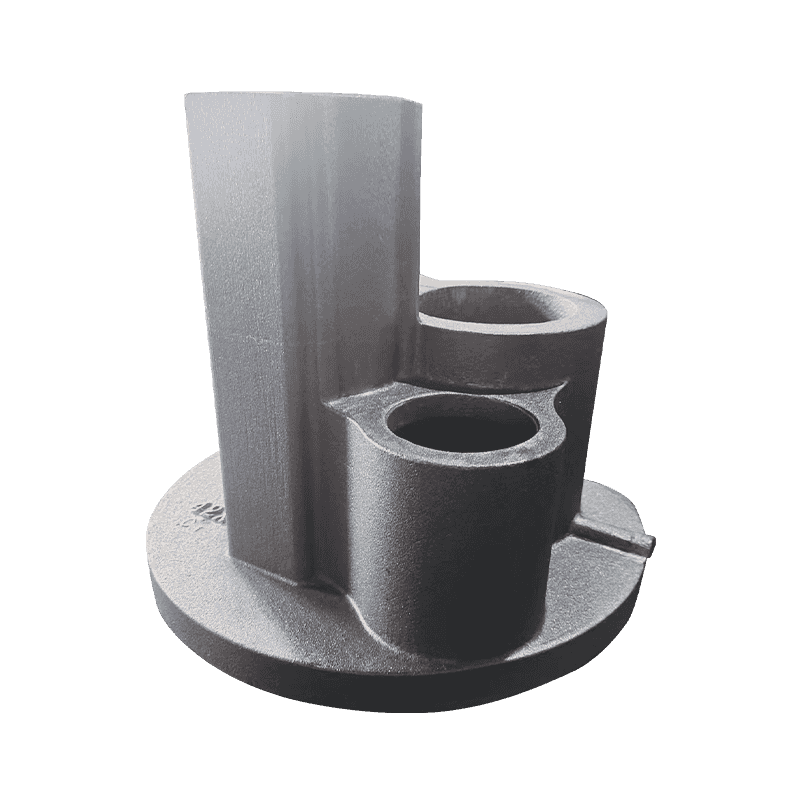
Compressors impose pressure cycling, sliding contact, and high local stresses. Cylinders, crankcases, valve plates, and exhaust seats need a material that will not wear, fret, or crack over tens of thousands of hours. ADI cylinder castings benefit from the combination of bore surface hardness and pressure capability. A foundry that already produces compressor cylinder castings in ductile iron has the base material knowledge needed to evaluate an austempered version for a severe-duty application.
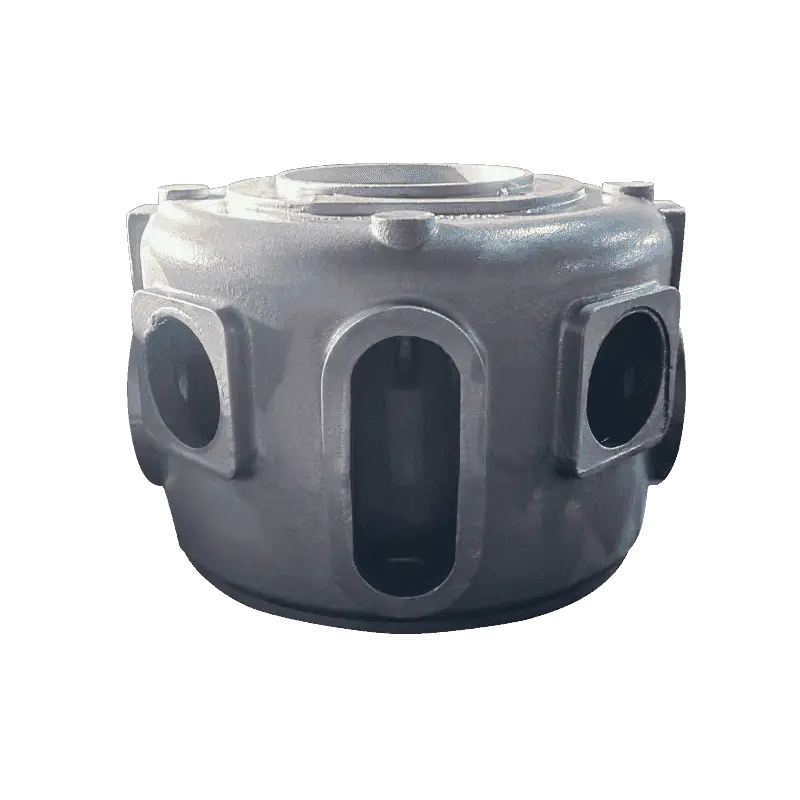
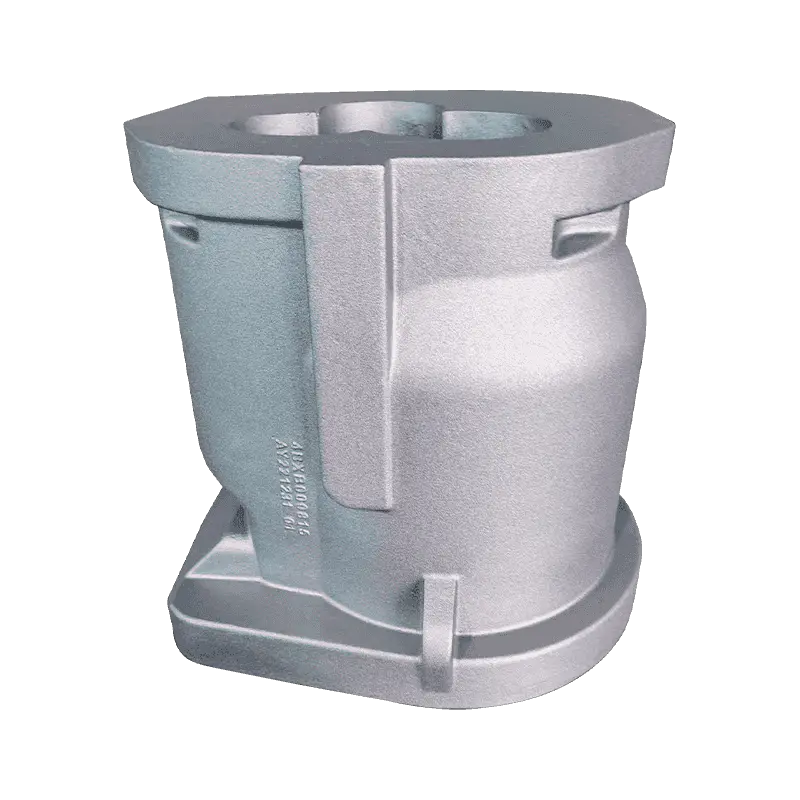
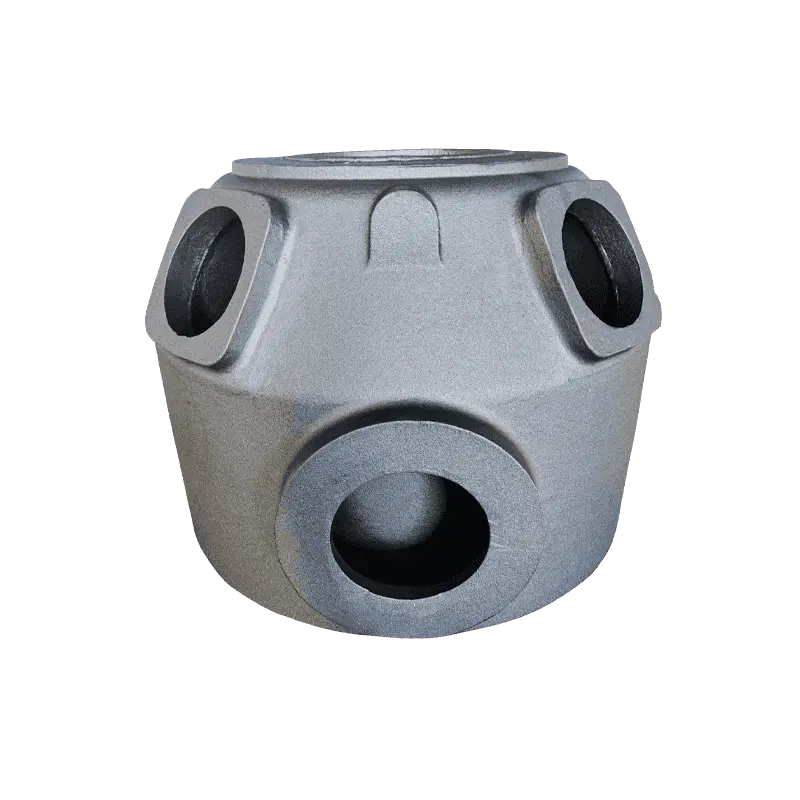 Custom Casting Compressor cylinder Manufacturers, Factory - Haian Aoyu MachineryHaian Aoyu Machinery Manufacturing Co., Ltd is China casting Compressor cylinder Manufacturers and casting Compressor cylinder Factory, w...View Product →
Pump and Valve Castings
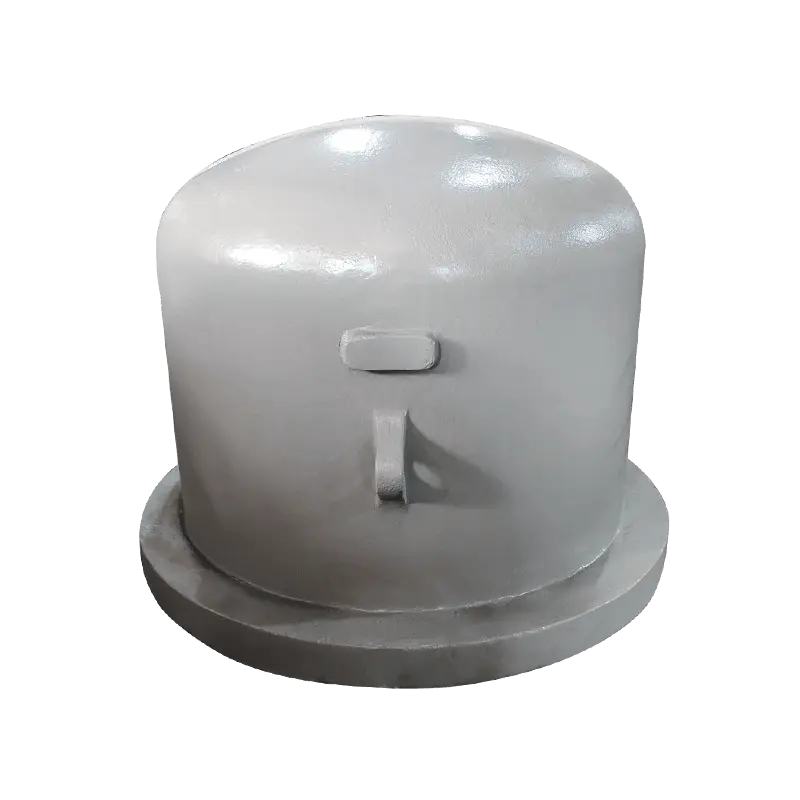
Pumps and valves face cavitation erosion, abrasive media, and pressure-holding requirements. The high hardness of ADI resists cavitation and particle erosion better than standard ductile iron, while the ductility of the lower grades keeps the part safe under surge loads. Impellers, wear rings, and valve bodies are natural candidates. For pump body castings in high-head or slurry service, specifying an austempered grade can meaningfully extend service life.
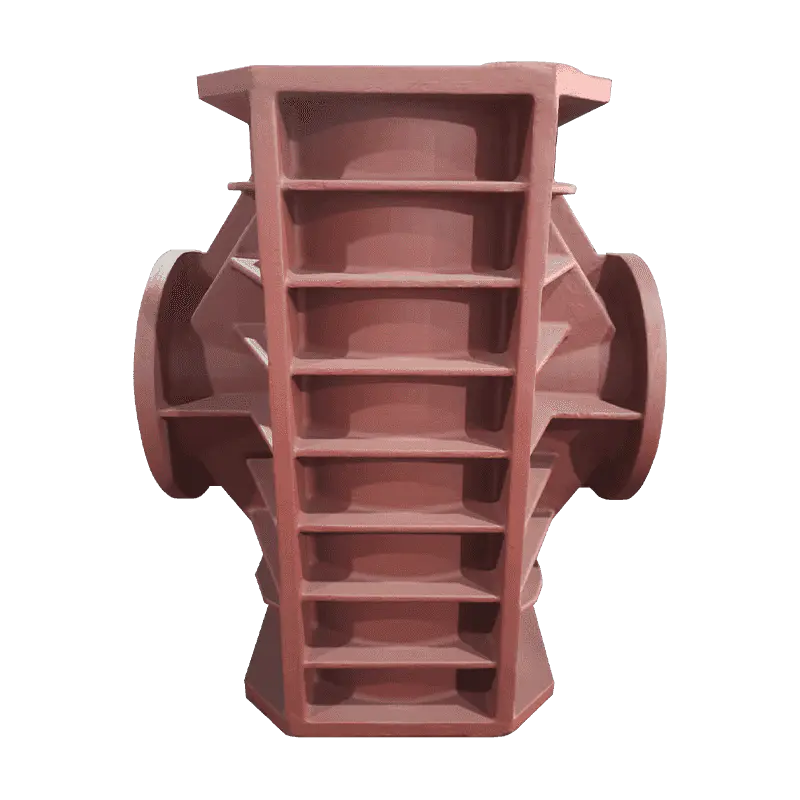
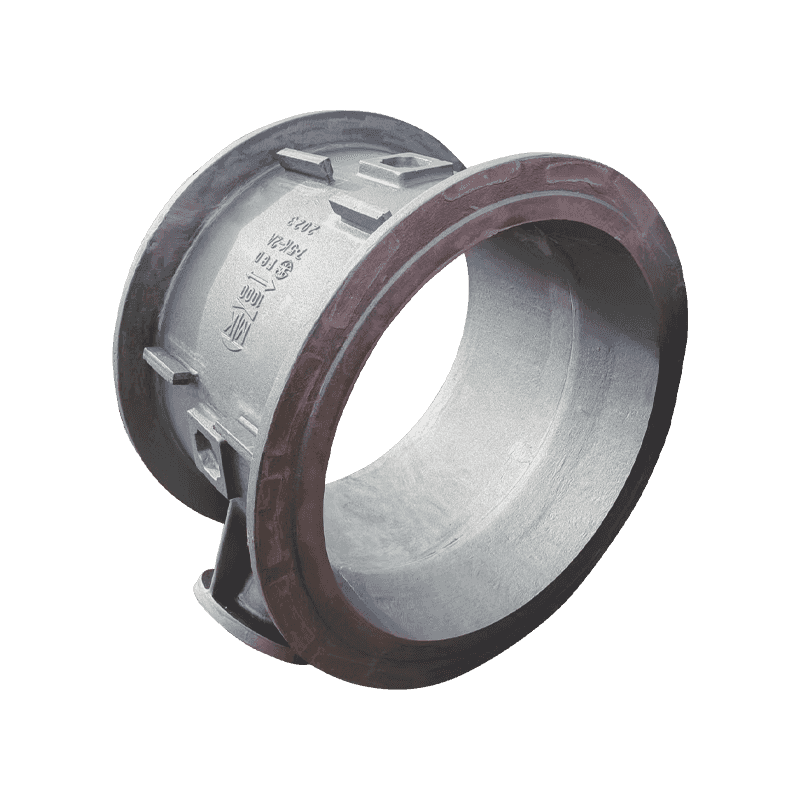 Custom Casting Pump body Manufacturers, Factory - Haian Aoyu Machinery ManufactuHaian Aoyu Machinery Manufacturing Co., Ltd is China casting Pump body Manufacturers and casting Pump body Factory, we offer custom Pump ...View Product →
Machine Tool Structures
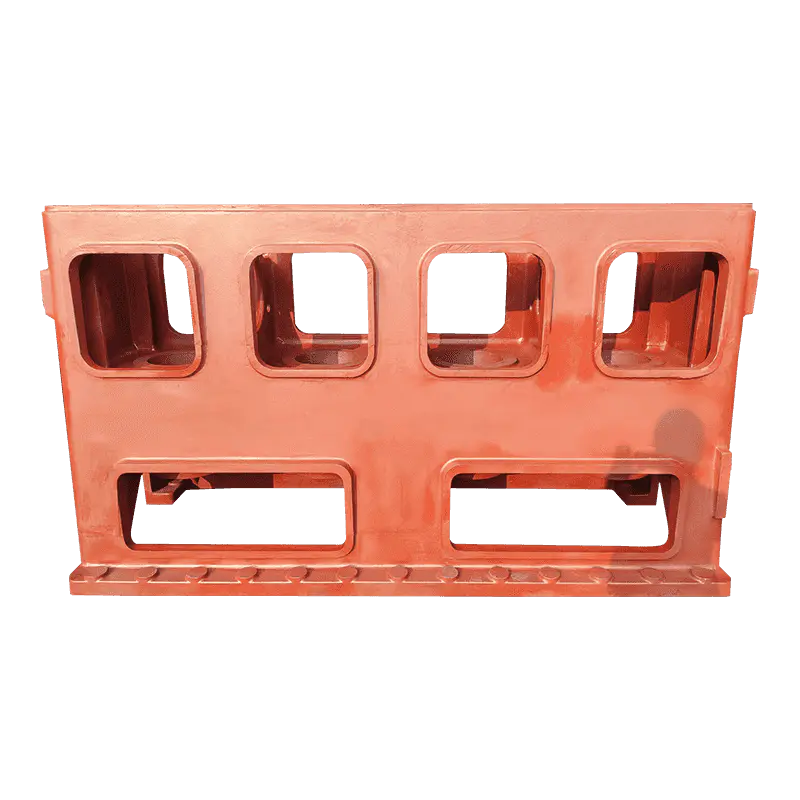
Machine tool guidance systems and structural components need rigidity, damping, and wear-resistant surfaces. Austempered ductile iron offers higher hardness than conventional cast iron while keeping the vibration-damping character that makes cast iron valuable in machine tools. Guideways, slides, and machine tool base castings can be produced with the near-net shape of a casting and then ground or scraped to final geometry.
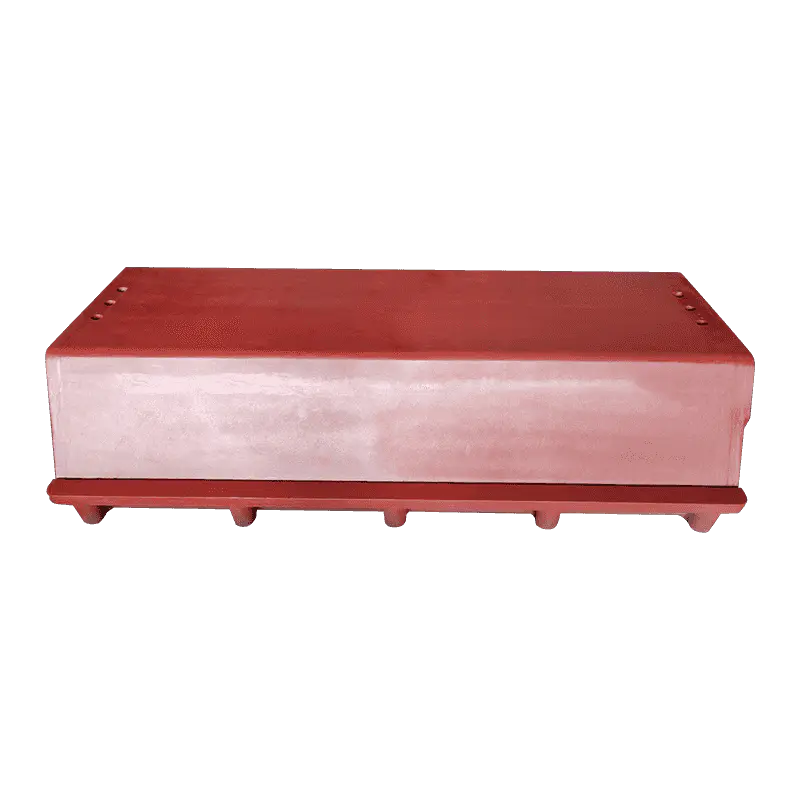
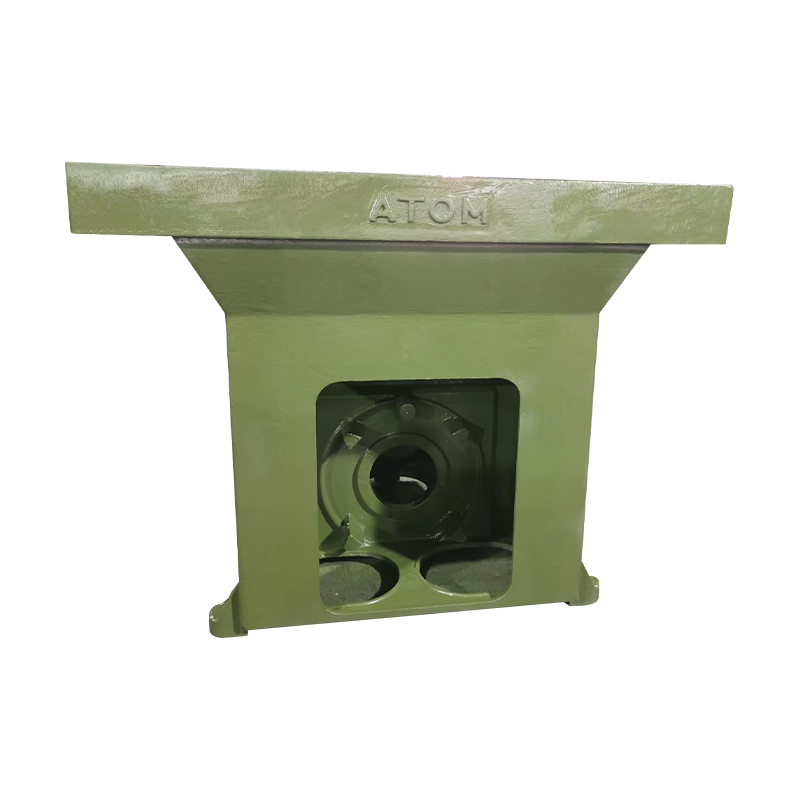 Custom Casting Machine base Manufacturers, Factory - Haian Aoyu Machinery ManufaHaian Aoyu Machinery Manufacturing Co., Ltd is China casting Machine base Manufacturers and casting Machine base Factory, we offer custom...View Product →
Cost and Design Considerations
ADI is not automatically the right answer for every casting. The heat treatment adds cost, and the added cost must be justified.
Weight Reduction
Because ADI is roughly twice as strong as conventional ductile iron, sections can be made thinner. Weight reductions of 20 to 30 percent are realistic when an existing ductile iron part is redesigned in ADI. When replacing a steel fabrication, the cost per kilogram of ADI is lower, and you save the welding and post-weld machining a steel weldment requires.
Machining After Austempering
Austempered iron is hard, typically 300 HB and above. Drilling, tapping, and milling after heat treatment demands carbide tooling and increases machining cost. Many producers machine the part in the ductile iron condition and then austemper it as a near-final step. That works when the heat treatment does not distort the part beyond tolerance. If machining must happen after austempering, keep stock allowances small and plan for harder tooling.
Section Size and Process Sensitivity
The austempering response depends on section thickness. Heavy sections can cool too slowly at the center, producing a mixed structure with lower properties than the test coupon indicates. Uniform wall thickness and smooth transitions protect you from this risk. Your foundry should confirm that the chosen grade can be achieved in the thickest section of the part.
Quality Verification
ADI properties cannot be verified by hardness measurement alone. Test coupons from the same heat, tensile testing, metallographic evaluation, and hardness surveys across the casting are the normal verification suite. If a supplier cannot provide that documentation, treat the material specification with caution. The heat treatment step is where ADI quality is made or lost.
Partnering With a Foundry That Knows Ductile Iron
The base casting determines how far austempering can take you. Melt quality, nodularity, shrinkage control, and consistent chemical composition are all established in the foundry before the part reaches a salt bath. This is where a dedicated ductile iron foundry adds value.
Haian Aoyu Machinery Manufacturing Co., Ltd. is a ductile iron and gray iron foundry in Nantong, China, that supplies compressor, pump, valve, and machine tool castings to customers in North America, Europe, and Asia. With an annual capacity of 20,000 tonnes, the company produces the exact component families where ADI is most frequently applied, including compressor bodies and cylinders, pump bodies, and machine tool bases. Its engineering team reviews load conditions and service environments on every project, which makes the quotation stage the right time to ask whether an austempered grade deserves consideration.
When you approach a foundry about ADI, bring three things: the complete load history of the part, the expected wear mechanism, and the dimensional tolerances that must survive heat treatment. Many components currently made from conventional ductile iron or steel forgings could be produced as austempered ductile iron castings. The material has been proven in production for decades, and the only way to know whether it fits your component is to have that discussion with a foundry that understands the process.