EN
EN  English
 Español
 русский
 Deutsch
Materials Engineering — Foundry Notes
Grey Cast Iron vs Ductile Cast Iron
A closer look at how one small change in graphite geometry rewrites the mechanical story of iron — and why it matters for every casting decision you make.
The Direct Answer: Graphite Structure Defines the Difference
The core difference between grey cast iron and ductile cast iron lies in the shape of the graphite within the metal matrix. Grey cast iron contains graphite in the form of flakes, which makes the material brittle and prone to cracking under tensile stress. Ductile cast iron, by contrast, contains graphite in spherical nodules, which gives it significantly higher tensile strength, elongation, and impact resistance. This single microstructural distinction changes almost everything about how the two materials perform, where they can be used, and how much they cost to produce.
If you are choosing between the two for a project, the short version is this: grey cast iron is ideal for parts that need to absorb vibration, resist compression, and stay dimensionally stable under heat, such as engine blocks and machine bases. Ductile cast iron is better suited for components that must withstand tension, impact, or repeated stress cycles, such as pipes, gears, and crankshafts. The rest of this article breaks down exactly why that is, using measurable data and practical examples.
Understanding the Microstructure
Both grey cast iron and ductile cast iron start from the same base: an iron-carbon alloy with silicon content typically between 1.8% and 3%. What happens during solidification determines the final graphite shape. In grey cast iron, carbon precipitates naturally into thin, interconnected flakes. These flakes act like microscopic cracks embedded throughout the metal, which is why grey iron fractures easily when pulled apart, even though it handles compression well.
Ductile cast iron is produced by adding a small amount of magnesium or cerium to the molten iron just before pouring. This treatment causes the graphite to form as round nodules instead of flakes. Because there are no sharp-edged flakes to concentrate stress, ductile cast iron can stretch and bend before it breaks, giving it elongation values as high as 18% compared to less than 1% for grey iron. This is the same principle used in many modern cast iron castings produced for structural or load-bearing applications.
grey cast iron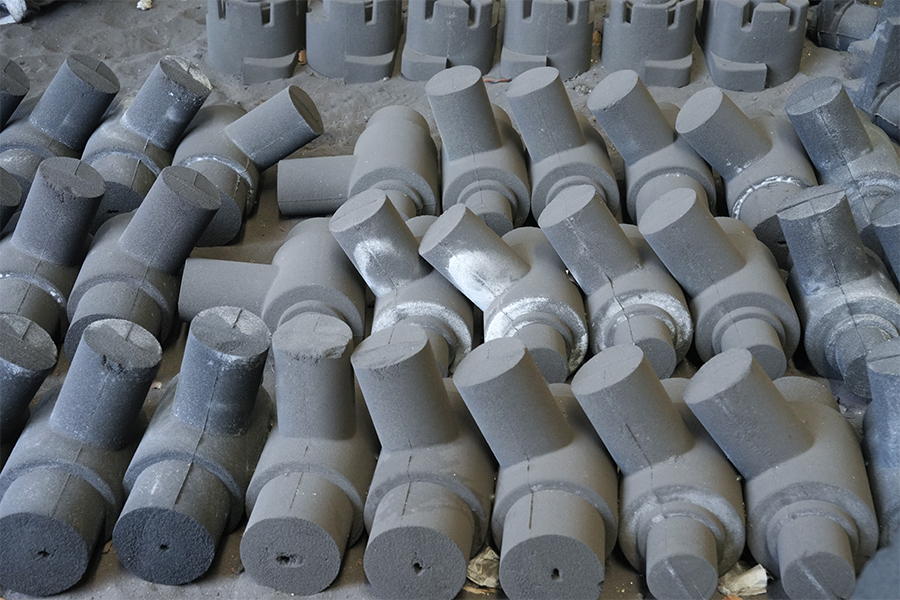
Grey iron's flake graphite behaves like a sheet of paper with tiny slits cut into it — pull on it and it tears along those slits. Ductile iron's spherical nodules are more like small air bubbles trapped in a solid block; they do not create the same continuous weak paths.
Why Nodule Shape Matters So Much
This is why engineers describe ductile iron as having "steel-like" mechanical behavior while retaining the castability and vibration-damping qualities of iron. The nodule, unlike the flake, has no sharp edge for a crack to grip onto — and that geometric detail is the entire reason one material shatters and the other bends.
Mechanical Property Comparison
The numbers make the difference easy to visualize. The table below compares common grades used in industry, based on typical values referenced by ASTM A48 (grey iron) and ASTM A536 (ductile iron) standards.
| Property | Grey Cast Iron (Class 30) | Ductile Cast Iron (65-45-12) |
|---|---|---|
| Tensile Strength | 30,000 psi | 65,000 psi |
| Yield Strength | Not well defined | 45,000 psi |
| Elongation | Less than 1% | 12% |
| Impact Resistance | Low | High |
| Vibration Damping | Excellent | Moderate |
| Machinability | Excellent | Good |
Ductile cast iron can be more than double the tensile strength of standard grey iron while also offering usable ductility, which is why it has replaced grey iron and even some steel forgings in demanding applications over the past several decades.
Where Each Material Performs Best
Choosing the right iron depends entirely on the stresses a part will face in service. Below is a practical breakdown of typical applications for each material.
Common Uses for Grey Cast Iron
- Engine blocks and cylinder heads, where vibration damping reduces noise
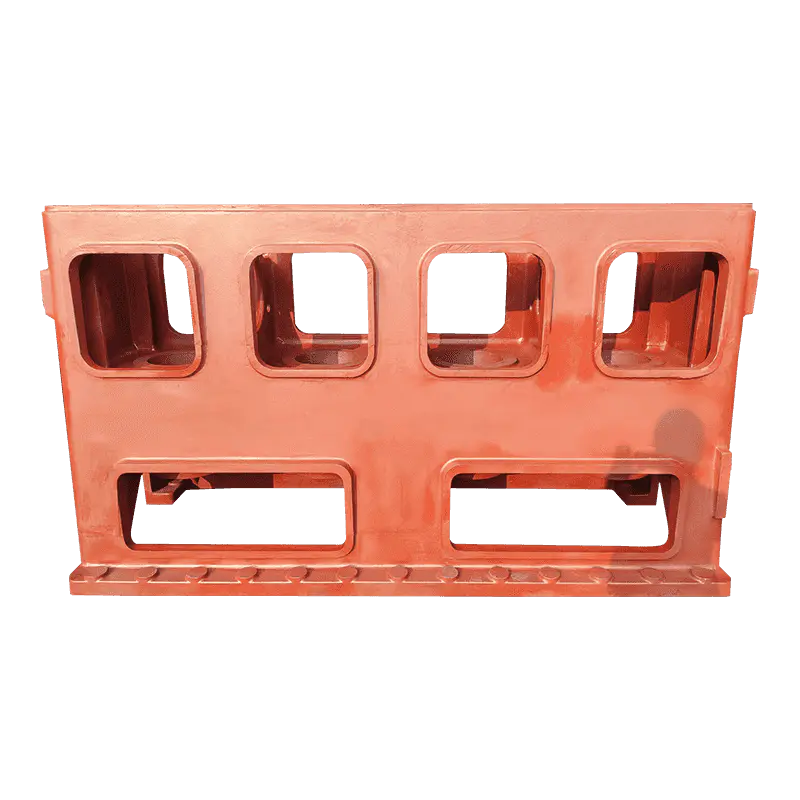
- Machine tool bases and frames that need dimensional stability
- Brake rotors and drums that benefit from thermal conductivity
- Decorative or architectural castings with intricate detail
Common Uses for Ductile Cast Iron
- Water and sewer pipes that must resist internal pressure and ground movement
- Automotive crankshafts, gears, and suspension components subject to cyclic loading
- Wind turbine hubs and gearbox housings that require high fatigue resistance
- Heavy machinery parts such as axle housings and hydraulic cylinder bodies
In the pipe industry specifically, ductile cast iron pipe has largely replaced grey iron pipe worldwide since the 1970s because of its resistance to sudden fractures under soil pressure or water hammer events. This shift is one of the clearest real-world proofs of ductile iron's practical advantage in tension-heavy applications.
Production Process and Cost Considerations
Grey cast iron is generally simpler and less expensive to produce because it does not require the magnesium treatment step needed to nodularize graphite. This treatment must be carefully controlled, since magnesium fades quickly after treatment and incorrect handling can cause the graphite to revert to flake or degenerate forms, weakening the casting. As a result, ductile iron production demands tighter process control, more skilled operators, and additional testing, which typically adds 10% to 25% to production cost compared to an equivalent grey iron casting.
Process Caution
Magnesium treatment is time-sensitive. If pouring is delayed too long after treatment, magnesium fade can allow graphite to drift back toward flake or degenerate shapes — silently reducing strength without any visible surface defect.
However, this added cost is often offset by design efficiency. Because ductile cast iron can handle higher stress per unit of cross-section, engineers can reduce wall thickness and overall part weight while maintaining the same load capacity. In many cases, a thinner ductile iron casting ends up costing about the same as, or even less than, a bulkier grey iron equivalent once material savings are factored in.
Heat Treatment Options
Ductile cast iron also opens the door to further property enhancement through heat treatment. Austempered ductile iron, or ADI, can reach tensile strengths above 150,000 psi while still retaining reasonable ductility, making it a genuine alternative to forged steel in some gear and structural applications. Grey iron, by comparison, offers limited heat-treatment flexibility because its flake graphite structure restricts strength gains.
Design Advantage
A properly specified ductile iron grade often allows a part to be redesigned thinner and lighter than its grey iron equivalent, sometimes offsetting the entire premium of the magnesium treatment step.
How to Choose Between Grades When Sourcing
When working with ductile iron suppliers or evaluating ductile iron manufacturers, it helps to ask specific, measurable questions rather than relying on general product descriptions. The following steps can guide a sourcing decision:
- Confirm the required mechanical grade (for example, 60-40-18 or 80-55-06) matches your load and impact conditions.
- Request certified material test reports showing nodularity percentage, typically expected above 85% for structural-grade parts.
- Ask whether the foundry performs ultrasonic or metallographic testing to confirm graphite shape consistency across the casting.
- Verify compliance with recognized standards such as ASTM A536, ISO 1083, or EN 1563.
- Compare quoted wall thickness and weight against a grey iron alternative to assess true cost efficiency.
Sourcing Tip
Reliable ductile iron suppliers should be able to provide traceability from raw material heat to finished part, along with documented nodularity results for each batch. This is particularly important for safety-critical components like pressure pipe fittings or automotive suspension parts.
Common Misconceptions Worth Clearing Up
A frequent misunderstanding is that ductile cast iron is simply a "better" version of grey cast iron in every situation. This is not accurate. Grey iron's flake graphite structure gives it superior vibration damping and thermal conductivity, properties that are genuinely useful in engine components and machine tool bases where reducing noise and thermal distortion matters more than tensile strength. Choosing ductile iron for these applications would not necessarily improve performance and would add unnecessary cost.
Another misconception is that all ductile iron performs identically regardless of grade. In reality, the difference between a 60-40-18 grade and an 100-70-03 grade can mean nearly double the yield strength with a significant trade-off in elongation, so grade selection should always be matched to the specific stress profile of the application rather than assumed to be interchangeable.
Risk to Avoid
Never assume nodularity is acceptable just because a casting looks sound on the surface. Degenerate graphite forms can drop mechanical performance well below the specified grade while leaving no visible external trace — verification through metallographic testing is the only reliable safeguard.
Final Takeaway for Buyers and Engineers
Grey cast iron and ductile cast iron are related materials with fundamentally different mechanical behavior, driven almost entirely by the shape of graphite in their microstructure. Grey iron remains the practical choice for parts that benefit from vibration damping, thermal stability, and lower cost, while ductile cast iron is the stronger, more versatile option for components exposed to tension, impact, or repeated stress cycles.
For buyers evaluating cast iron castings for a new project, the decision should start with the actual loading conditions the part will experience in service, not just historical convention. Working with experienced ductile iron manufacturers who can provide clear mechanical test data, appropriate grade recommendations, and consistent nodularity control will ultimately determine whether a casting performs reliably over its intended service life.