EN
EN  English
 Español
 русский
 Deutsch
Materials Engineering — Casting Comparison
Grey cast iron has lower tensile strength, less ductility, and reduced impact resistance compared to ductile iron, making it a weaker choice for components subject to shock loading, tension, or repeated stress cycles. While grey cast iron remains valuable for its excellent damping capacity, machinability, and low cost, ductile iron consistently outperforms it in applications demanding structural reliability under dynamic or high-stress conditions. Understanding these differences helps buyers avoid costly failures when selecting between the two materials for industrial or mechanical parts.
Lower Tensile Strength Limits Load-Bearing Applications
One of the most significant disadvantages of grey cast iron is its comparatively low tensile strength. Typical grades of grey cast iron, such as Class 30 or Class 40, offer tensile strength ranging from 30,000 to 40,000 psi, while ductile iron grades like 65-45-12 can reach tensile strengths of 65,000 psi or higher. This gap becomes critical in applications where components must resist pulling forces, such as pipe fittings, structural brackets, or machine housings under load.
Because grey cast iron casting relies on a graphite flake microstructure, tensile loads concentrate stress at the tips of these flakes, leading to premature cracking. Ductile iron, by contrast, contains spheroidal graphite nodules that distribute stress more evenly throughout the material, allowing it to withstand significantly higher loads before failure.
Reduced Ductility and Elongation Before Failure
Ductility refers to a material's ability to deform under stress without breaking. Grey cast iron typically exhibits less than 1% elongation before fracture, meaning it behaves in a brittle manner when subjected to bending, twisting, or stretching forces. Ductile iron, true to its name, can achieve elongation values between 10% and 18% depending on the grade, allowing components to flex slightly under stress rather than snapping suddenly.
This difference matters greatly for parts that experience vibration, thermal expansion, or minor misalignment during operation. A gray iron casting used in a rigid, low-stress environment may perform adequately, but the same part exposed to dynamic loading is far more likely to fail without warning compared to a ductile iron equivalent.
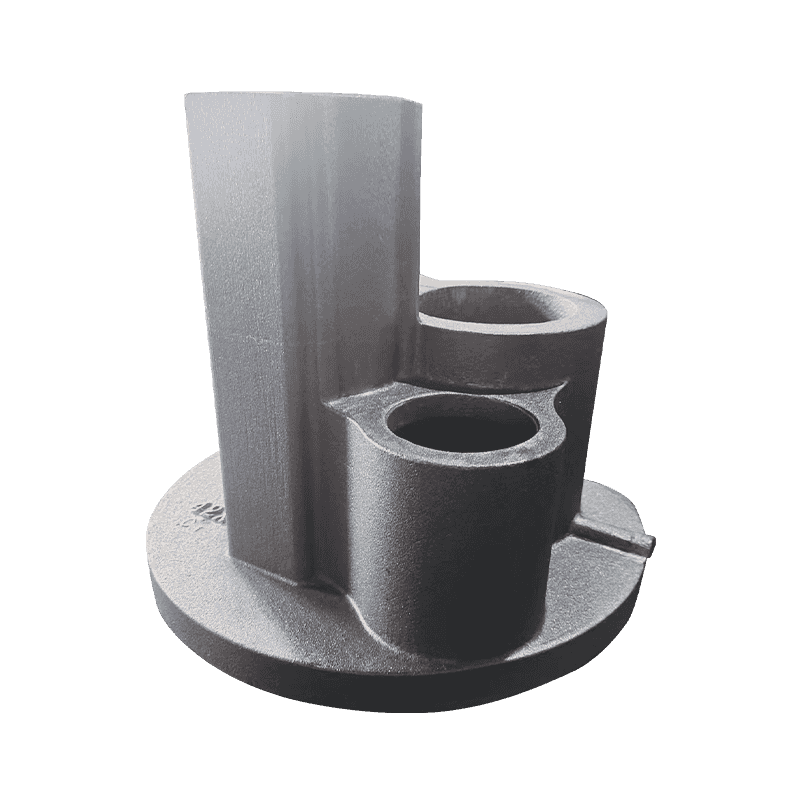
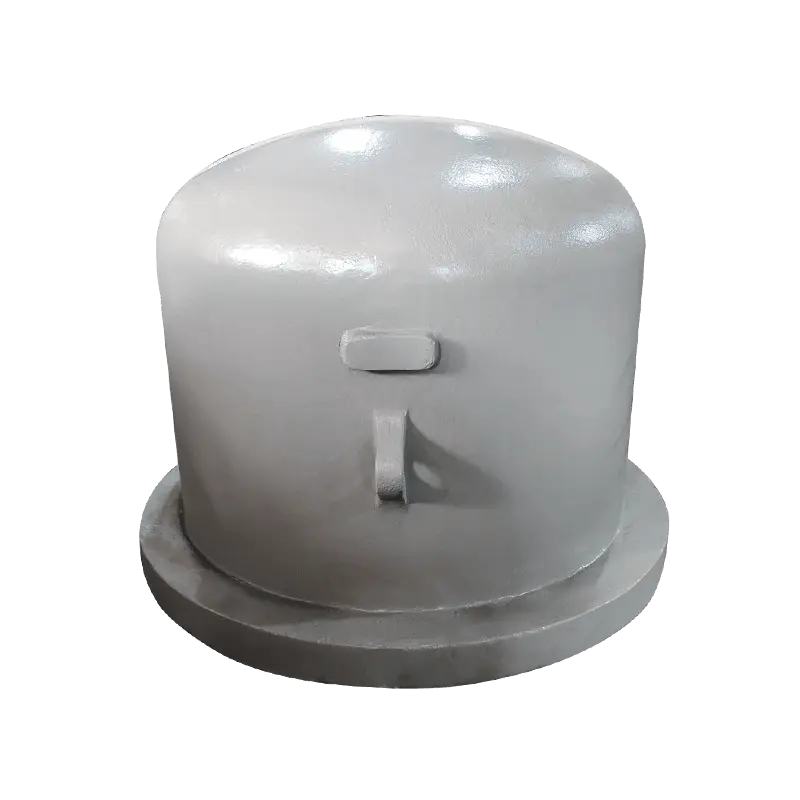
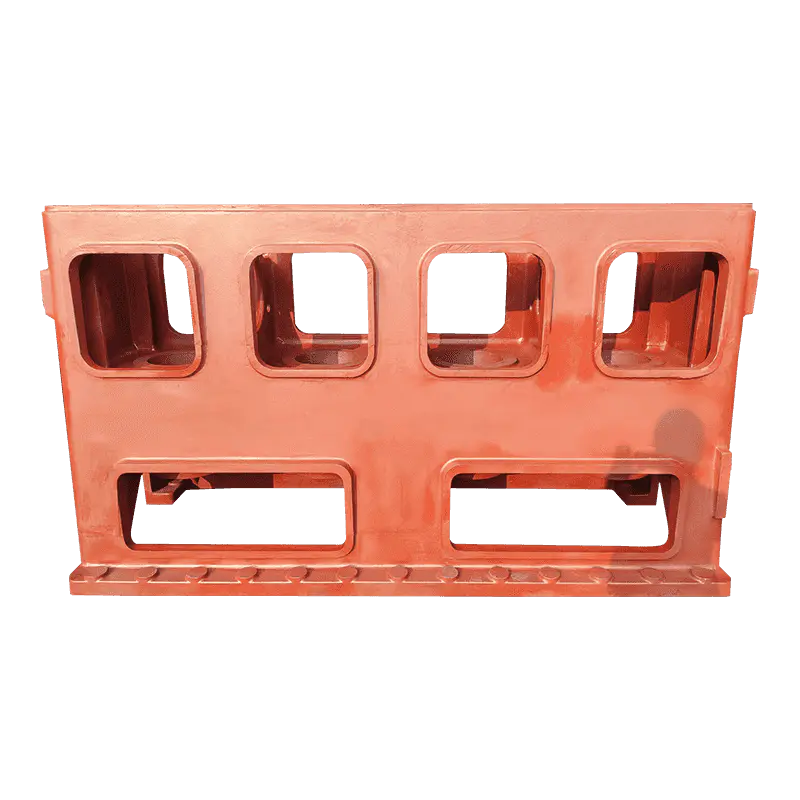
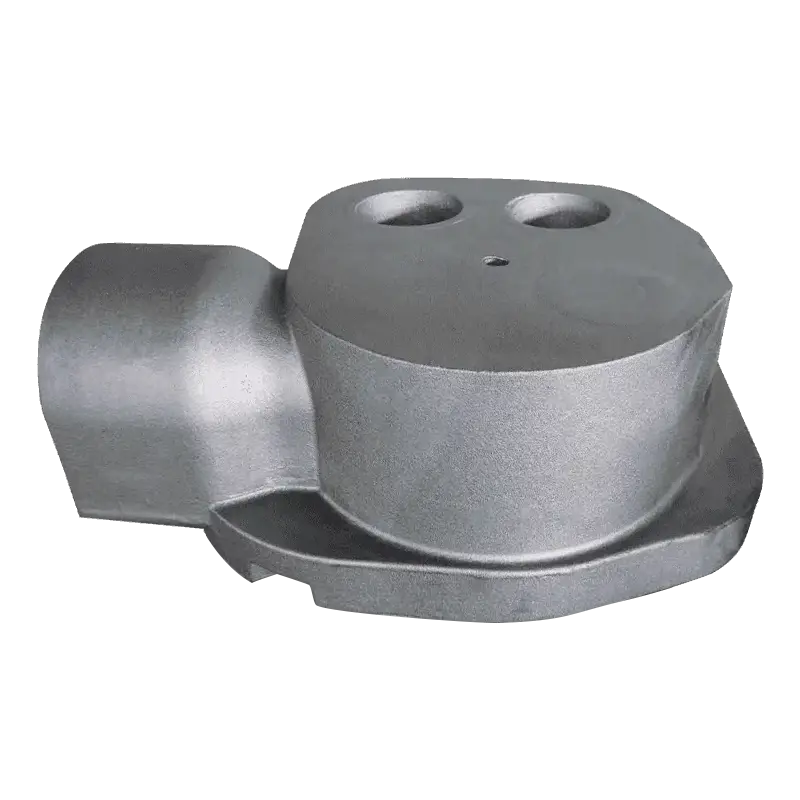
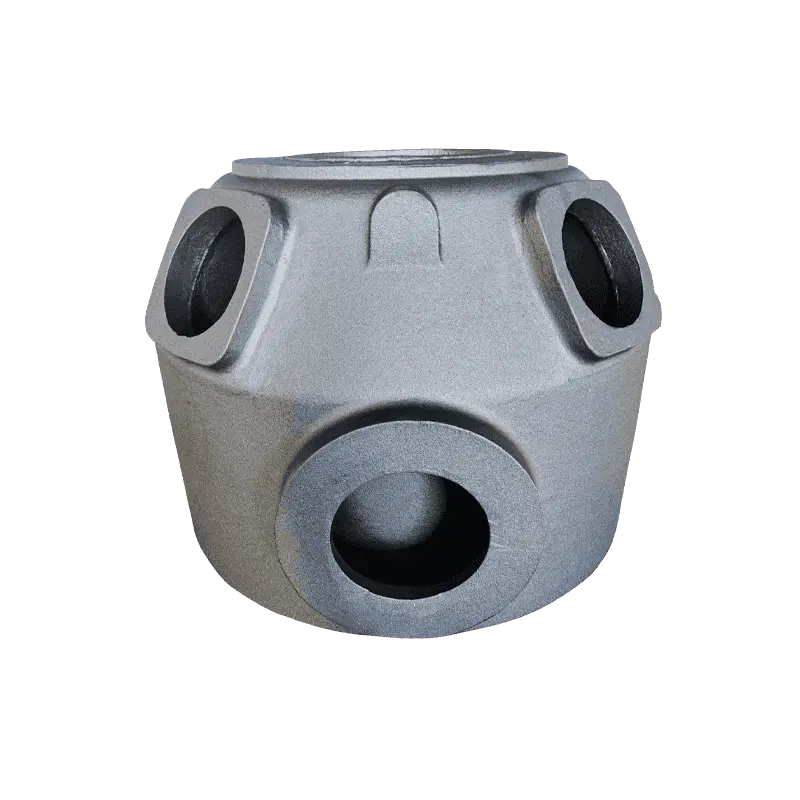
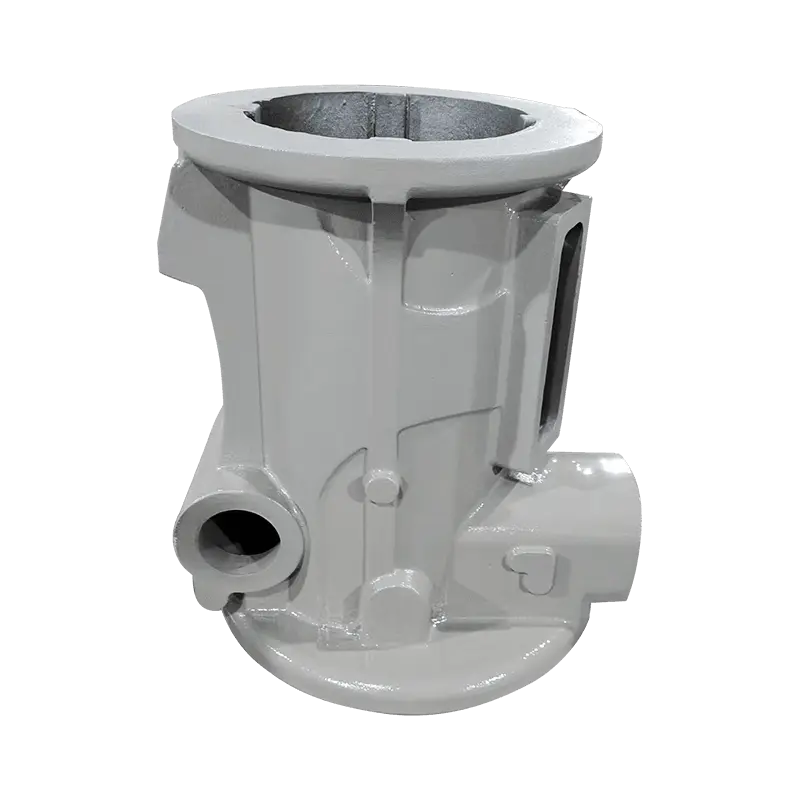
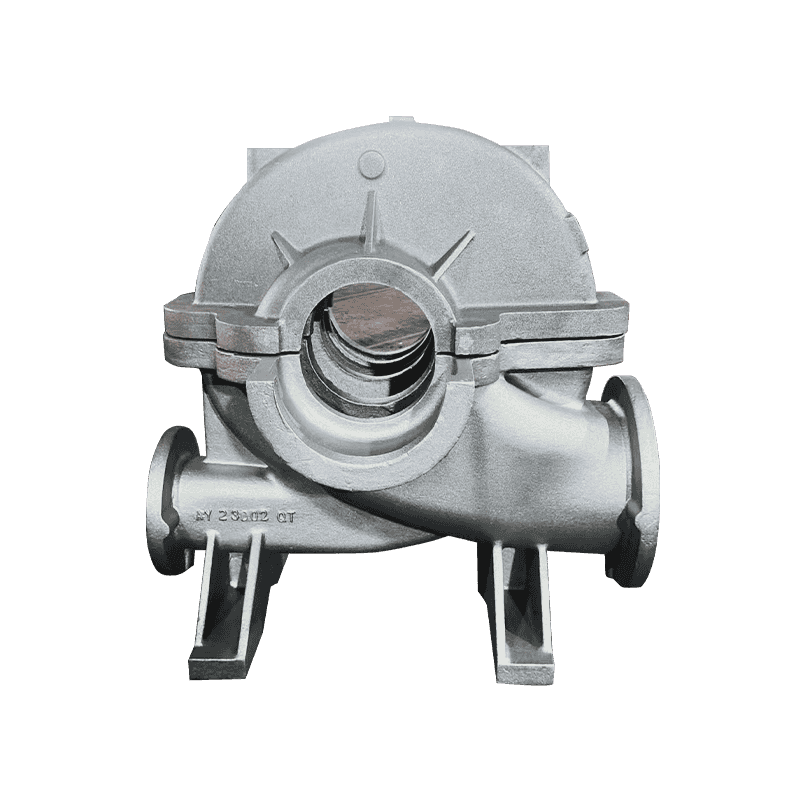
Grey cast iron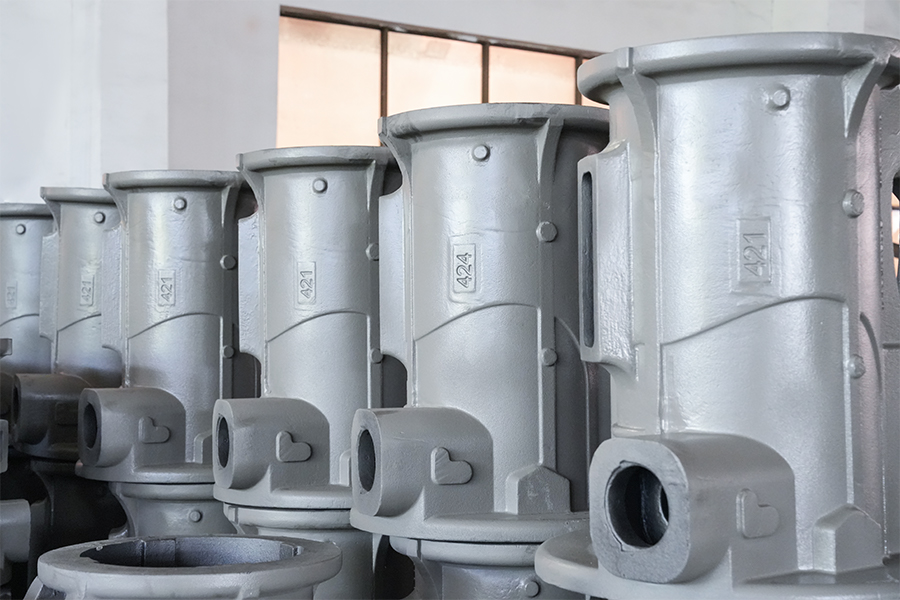
Comparative Mechanical Properties
| Property | Grey Cast Iron | Ductile Iron |
|---|---|---|
| Tensile Strength | 30,000–40,000 psi | 60,000–100,000 psi |
| Elongation | Less than 1% | 10%–18% |
| Impact Resistance | Low | Moderate to High |
| Graphite Structure | Flake | Spheroidal Nodules |
Poor Performance Under Impact and Shock Loading
Grey cast iron's brittle nature makes it particularly vulnerable to sudden impact or shock loads. The graphite flakes act as internal stress risers, and when a sharp force is applied, cracks can propagate rapidly through the material with little to no warning. This is why grey cast iron casting is generally avoided in applications such as automotive suspension components, mining equipment, or heavy machinery frames that experience repeated jolts.
Ductile iron's nodular graphite structure interrupts crack propagation far more effectively — a crack must navigate around each nodule, absorbing energy and slowing failure.
Engineers often specify ductile iron over gray iron castings specifically for this reason when impact resistance is a design priority.
Common Impact-Sensitive Applications Where Ductile Iron Is Preferred
- Vehicle suspension and steering knuckles
- Wind turbine gearbox housings
- Heavy construction equipment brackets
- Pressure pipe fittings subject to water hammer
- Agricultural machinery components exposed to rocks and debris
Warning
Specifying grey cast iron in shock-loaded assemblies without adequate design margin significantly raises the risk of sudden, unannounced fracture.
Lower Fatigue Resistance in Cyclic Loading Conditions
Fatigue resistance describes how well a material withstands repeated stress cycles over time without developing cracks. Grey cast iron generally has a fatigue limit of roughly 35% to 50% of its tensile strength, and because its base tensile strength is already low, its absolute fatigue endurance is correspondingly weak. Components made from gray iron castings that experience continuous vibration, rotation, or pressure fluctuation are prone to developing micro-cracks that eventually lead to fatigue failure.
Ductile iron typically achieves a fatigue limit closer to 40% to 60% of its higher tensile strength, translating into a much greater absolute fatigue endurance. This makes ductile iron the preferred material for crankshafts, gears, and rotating machinery parts where millions of load cycles are expected over the component's service life.
Weaker Weldability and Repair Challenges
Welding grey cast iron is notoriously difficult due to its high carbon content and brittle matrix. Rapid heating and cooling during welding often introduces new stress points, causing cracks to form near the weld zone. Specialized preheating, slow cooling, and nickel-based filler rods are usually required to achieve an acceptable weld, adding time and cost to repair or fabrication work.
Info
Ductile iron generally responds better to standard welding procedures because of its more forgiving nodular structure, which can meaningfully shorten field repair timelines.
Higher Risk of Sudden, Catastrophic Failure
Because grey cast iron lacks the ductility to deform visibly before breaking, failures often occur without any early warning signs such as bending, bulging, or noticeable deformation. This "brittle fracture" behavior is a serious concern in safety-critical applications, where operators rely on visible signs of stress to schedule maintenance or replacement before a part fails completely.
Danger
Brittle fracture in grey cast iron provides little to no visible deformation before failure, making it unsuitable for safety-critical, pressure-bearing, or load-path-critical components.
Ductile iron's plastic deformation before fracture provides a built-in early warning system. A ductile iron part under excessive stress will typically bend or distort noticeably before it breaks, giving maintenance teams a chance to intervene. This behavioral difference is a major reason why industries such as water infrastructure, automotive safety components, and pressure vessel manufacturing favor ductile iron over grey cast iron casting for critical parts.
Where Grey Cast Iron Still Holds an Advantage
Despite these disadvantages, grey cast iron is not without merit. Its excellent vibration damping capacity makes it a strong choice for engine blocks, machine tool bases, and other applications where absorbing vibration matters more than resisting tension or impact. Grey cast iron is also generally less expensive to produce and easier to machine than ductile iron, since the graphite flakes act as a natural lubricant during cutting operations, reducing tool wear.
For buyers evaluating gray iron castings against ductile iron alternatives, the decision often comes down to a straightforward trade-off: choose grey cast iron for cost-sensitive, compression-loaded, vibration-damping applications, and choose ductile iron when tensile strength, impact resistance, or fatigue performance under cyclic stress is a priority.
Quick Decision Checklist
- Does the part experience tension or bending loads? Choose ductile iron.
- Is vibration damping the primary requirement? Grey cast iron may suffice.
- Will the component face repeated shock or impact? Ductile iron is safer.
- Is budget the dominant constraint with low mechanical demand? Grey cast iron casting offers cost savings.
- Does the application involve pressure-bearing pipe or safety-critical parts? Ductile iron is the industry standard.
Success
Matching material choice to load type — tension versus compression, static versus cyclic — is the single most effective way to prevent premature part failure.
Final Considerations for Material Selection
Selecting between grey cast iron and ductile iron ultimately requires a clear understanding of the mechanical demands a component will face throughout its service life. While grey cast iron casting remains a practical, economical option for many low-stress or vibration-sensitive applications, its disadvantages in tensile strength, ductility, impact resistance, and fatigue performance make it unsuitable for parts that must endure dynamic or safety-critical loading. Buyers who prioritize long-term reliability and predictable failure behavior will generally find that ductile iron delivers stronger performance, even at a higher upfront material cost, making it the more resilient choice for demanding industrial environments.